Rice Cooker OEM & ODM
A rice cooker is sold on capacity in liters and on whether it is IH, and neither tells you whether the rice will be good. The two things that decide that are how evenly the heat reaches the pot and what temperature the keep-warm holds — and keep-warm is where the food-safety question lives.
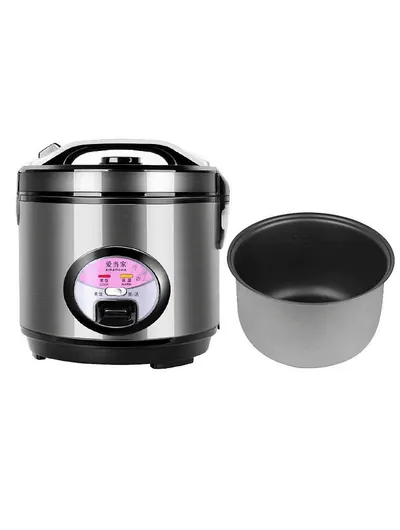
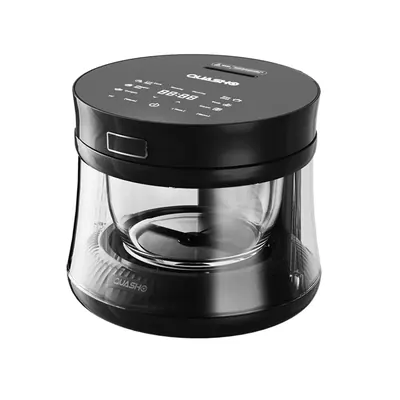
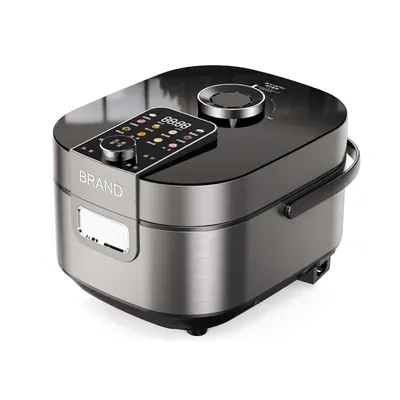
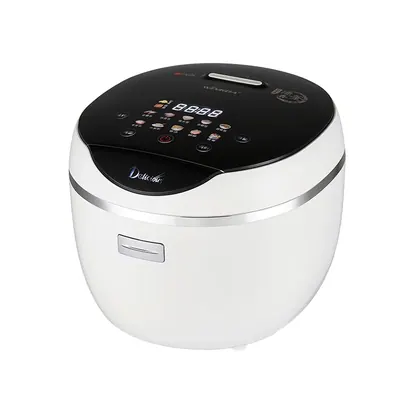
Keep-warm temperature is the number nobody prints
Rice held between roughly 10 and 60 °C is in the range where bacteria grow, and a keep-warm function sits right at the top of that range. A cooker that holds rice at 60 °C is keeping it warm; one that holds it at 50 °C is incubating it.
The good designs hold the pot at 65 to 70 °C by cycling the heater and measuring the pot temperature, not the air above it. That requires a sensor in contact with the pot base and a control that can hold a band, which is why the cheapest cookers either have no keep-warm or a keep-warm that is a timer.
Conventional, IH, and what induction actually changes
A conventional cooker heats a plate under the pot; an induction cooker heats the pot itself by magnetic field. The difference is where the heat enters: from below only, or through the whole base. That matters for evenness, and evenness matters for texture.
Induction also responds faster, which lets the control follow a cooking curve rather than a fixed timer. Whether the customer can taste the difference is debatable; whether the rice is even from edge to center is not.
| Type | Heat path | Evenness | Control | Where it belongs |
|---|---|---|---|---|
| Conventional plate | Under the pot only | Moderate — center hotter | Timer and thermostat | Value and mainstream |
| IH | Through the pot base | Better, edge to edge | Cooking curve possible | Mid and premium |
| Pressure IH | IH plus pressure | Best | Curve plus pressure stages | Premium, Asian markets |
The inner pot is a coated wear part
The non-stick coating on the inner pot wears, and when it wears the rice sticks and the customer uses metal utensils, which wears it faster. A thick coating on a good substrate lasts years; a thin coating on a pressed aluminum pot lasts months.
The pot also has to be replaceable. A cooker whose pot cannot be bought as a spare becomes waste when the coating fails, and the customer's next purchase is a different brand. Selling the pot as a spare is a commercial decision as much as a design one.
Capacity: the cup is not a metric cup
Rice cooker capacity is quoted in liters and in cups, and the cup is the small rice-measure cup of about 180 ml, not a 250 ml kitchen cup. A '10 cup' cooker holds about 1.8 liters of dry rice, which is far more cooked rice than most households expect.
For an OEM program the useful specification is both: liters of the pot and the number of rice cups, plus the minimum useful batch. A cooker that needs a minimum of three cups is a cooker that cannot cook for one person.
Market configuration at a glance
| Market | Voltage | Plug | What changes |
|---|---|---|---|
| EU / UK | 220–240 V | C / F, G | Food-contact and non-stick declarations, WEEE, local-language manual |
| North America | 110–120 V | A / B | Higher current, larger capacities, often with a steamer tray |
| Japan | 100 V | A | Pressure IH common, keep-warm accuracy expected |
| South Korea | 220 V | C / F | KC marking, pressure models dominant |
| SE Asia | 220–240 V | C / G | Humid climate; keep-warm and rice quality are the buying criteria |
Rice cooker questions buyers ask
What keep-warm temperature is safe?
About 65 to 70 °C held at the pot. Below 60 °C rice sits in the range where bacteria grow, and a keep-warm that holds 50 °C is worse than no keep-warm at all, because the customer trusts it.
Is IH worth the cost?
It heats the pot through its whole base instead of only from below, so the rice is more even from edge to center, and it lets the control follow a cooking curve. Whether that is worth it depends on how much the market cares about rice texture.
How many cups is a 10-cup cooker?
Ten rice-measure cups of about 180 ml, so roughly 1.8 liters of dry rice — considerably more cooked rice than most people expect. Ask for both the pot volume and the cup count.
What fails first?
The inner pot coating, then the lid gasket and the steam vent. A pot that can be bought as a spare keeps the cooker in service; a sealed pot ends the product's life at the first scratch.
Tell us the market, the capacity and whether keep-warm accuracy matters, and we will quote the pot and the control as separate lines so the trade-off is visible.
Need help choosing?
Send us the product type, target market and estimated volume — we will shortlist models and quote.