Portable Air Conditioner OEM & ODM
A portable air conditioner is the appliance most often bought in a hurry and returned in a week, because the number on the box describes the machine and not the room. Cooling capacity, hose arrangement and condensate handling are the three specifications that decide whether it works where it is placed.
Portable Air Conditioner OEM & ODM: models, specifications and MOQ
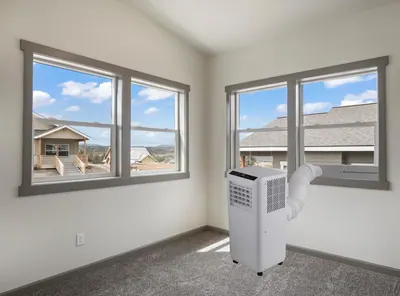
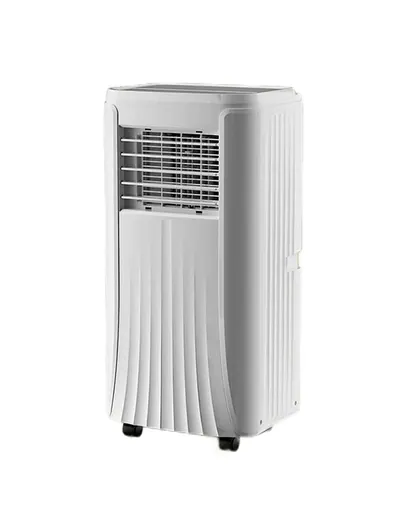
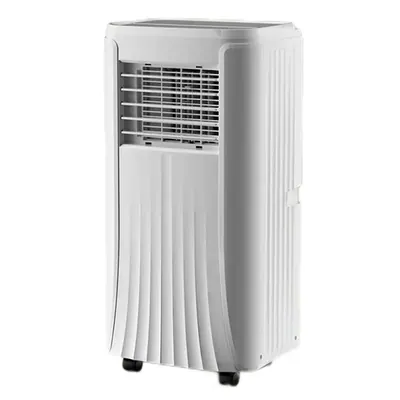
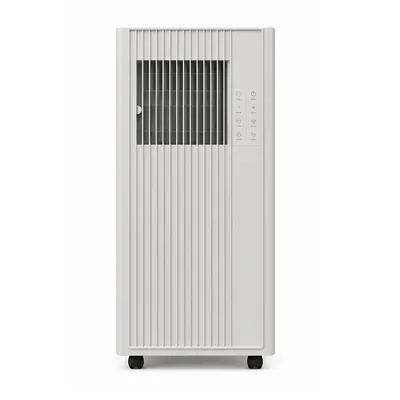
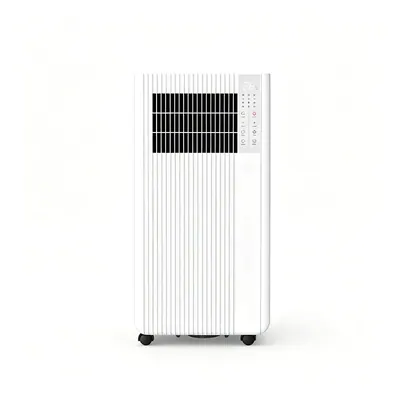
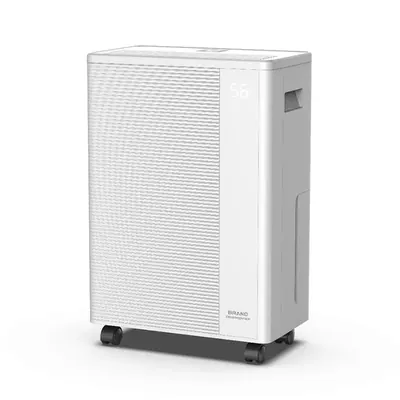
Capacity is a room number, not a machine number
Cooling capacity is quoted in BTU per hour or in kilowatts, and it is measured under conditions that a bedroom rarely meets. A room with a west-facing window and a lot of glass needs more capacity than the same floor area in a shaded flat. The practical rule buyers use is to size for the room plus the sun load, then accept that a portable unit cools the space it stands in rather than the whole apartment.
Single-hose and dual-hose designs behave differently for the same nominal capacity. A single hose pulls room air through the unit and blows it outside, which creates a slight negative pressure and draws warm air back in through every gap. A dual-hose unit takes outdoor air for the condenser and returns it outside, so the room pressure stays closer to neutral. It costs more and cools more predictably.
The window kit decides whether the unit is usable at all
Every portable unit needs a way to exhaust hot air. A sliding-window plate is the usual answer, and it has to match the window frame depth and the opening width of the market it sells into. A kit that only fits one frame type turns a working appliance into a return.
Hose length is a trade-off: a short hose keeps the unit efficient, a long one reaches a window across a room but loses capacity and radiates heat back into the room. Around 1.5 m is the common compromise, with an extension available as an accessory.
Condensate is the part buyers do not plan for
Cooling produces water. Some units evaporate it through the condenser and need emptying rarely; others collect it in a tank that has to be drained, and a full tank stops the compressor. A self-evaporating design is easier to live with in humid climates, where the alternative is emptying a tank twice a day.
Drainage also affects placement. A unit with a continuous drain point can be run to a window or a bucket; a unit with only a tank has to stay where it can be reached.
Specification by market
| Market group | Voltage | Plug | Common format |
|---|---|---|---|
| UK / Europe | 230 V | Type G / Type F | Dual hose, window plate |
| 120 V markets | 120 V | Type A / Type B | Single hose, sash-window kit |
| Japan | 100 V | Type A | Compact body, short hose |
| Australia / NZ | 230 V | Type I | Dual hose, sliding-window kit |
Private label decisions that show on the shelf
Noise is quoted in dB(A) at a distance, and the distance matters. A unit rated quietly at 3 m can be intrusive at 1 m, which is where it usually sits in a bedroom. Ask for the figure at 1 m as well as the label value.
The control panel and the remote are the parts a buyer touches, so backlit displays and a remote holder are cheap upgrades with visible value. Carton artwork should show the window kit in use, because that is the step buyers get wrong.
Portable air conditioner questions buyers ask
Does a portable unit cool as well as a split system?
No. It cools the room it is in, more slowly, and it adds compressor noise to the room. It is chosen where a split cannot be installed.
Why does the unit blow warm air at first?
The compressor needs a short start-up period and the hose is heating up. If it continues, the exhaust is leaking back indoors.
Can the water tank be ignored?
Not on a tank-based unit. A full tank stops cooling, and on some models the unit restarts automatically once drained, which is a useful feature to specify.
Send the room sizes, the window type and the climate your market sells into, and we will quote single-hose and dual-hose builds with the matching window kit, so the box states a capacity the buyer can actually use.
Need help choosing?
Send us the product type, target market and estimated volume — we will shortlist models and quote.