Neck Fan OEM & ODM
A neck fan is worn, not placed, so it is judged on weight, noise at the ear and whether the airflow reaches the face. Those three numbers are in tension, and how a design resolves them is the product.
Neck Fan OEM & ODM: models, specifications and MOQ
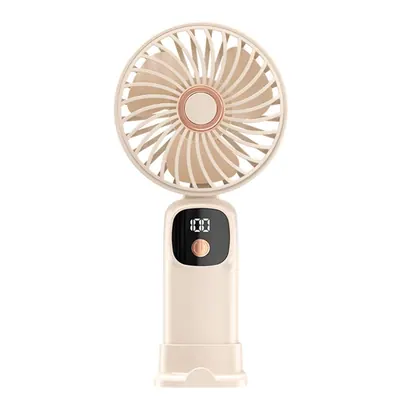

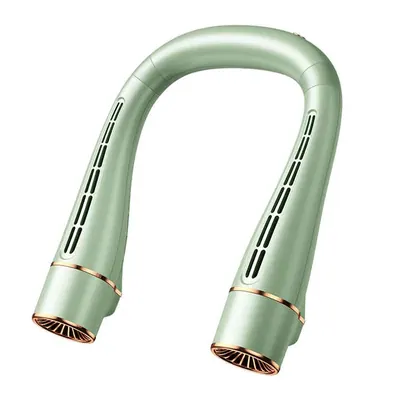
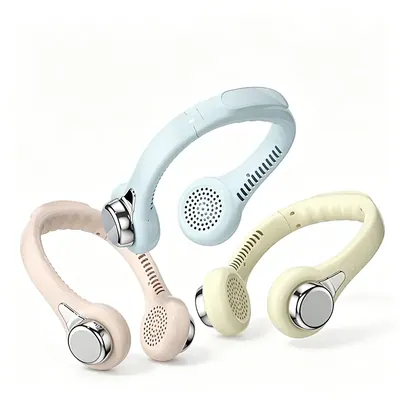
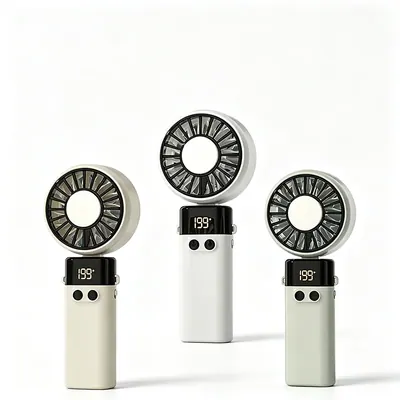
Weight and balance decide whether it is worn at all
The fan sits on the shoulders and around the neck, so weight at the back pulls the arms down and weight at the front presses on the collarbone. A balanced body with the battery centred is more comfortable than a lighter one with the battery at one end.
The arm shape matters as much. A fixed U-shape fits one neck size; a flexible or hinged arm adapts to different users. For a household product the flexible arm is usually the right choice, and it also folds smaller for storage.
Noise is measured at the ear, not at one meter
A neck fan's noise specification is often quoted at a distance that flatters it. What matters is the sound at the ear, which is where the outlets sit. A larger, slower fan moves the same air more quietly than a small, fast one, which is why blade size and duct shape decide the experience.
Airflow direction is the other half. Outlets angled toward the face feel cooler than outlets that blow along the neck, but they also dry the eyes. A design that splits the flow, some up and some along the neck, is the compromise most users prefer.
Battery, charging and the honest run time
Run time is quoted at the lowest speed; buyers use the middle speed. The useful figure is the run time at the setting people actually choose, and the charge time to go with it. USB charging is the default, and a USB-C port is now expected rather than optional.
Battery placement affects both balance and heat. A battery at the back of the neck warms the skin it rests on, which is the opposite of the product's purpose. Separating the battery from the air path is a design decision worth confirming.
Specification by market
| Market group | Charging | Plug for charger | Common format |
|---|---|---|---|
| UK / Europe | USB-C | Type G / Type F | Hinged arms, three speeds |
| 120 V markets | USB-C | Type A / Type B | Fixed U-shape, three speeds |
| Japan | USB-C | Type A | Compact, low-noise |
| Australia / NZ | USB-C | Type I | Hinged arms, travel case |
Private label decisions that show on the shelf
A neck fan is a fashion item as much as an appliance, so color range matters more than in almost any other category. A neutral body with a coloured accent is the safest first order; a full color range is a second order once the best seller is known.
The carton should show the fan being worn, with the airflow direction indicated. A travel pouch is a cheap inclusion that supports the product's main use case.
Neck fan questions buyers ask
Does a neck fan actually cool you?
It moves air over the skin, which helps evaporation. It does not lower the air temperature, so it works best in still, humid conditions.
How loud is it at the ear?
That depends on blade size and speed. Ask for the figure at the ear on the middle setting, not at one meter on the lowest.
Is a folding arm weaker?
A well-designed hinge is not. A cheap hinge loosens over time, so the hinge is a part to specify rather than leave to the supplier.
Tell us the climate, the color range and the run time you want to claim, and we will quote the arm format, the battery position and the packaging set.
Need help choosing?
Send us the product type, target market and estimated volume — we will shortlist models and quote.