Juicer OEM & ODM
A juicer is sold on wattage and the wattage tells you almost nothing. What decides how much juice ends up in the glass is the speed of the extraction and the dryness of the pulp that comes out the other end — and those two numbers are never on the box.
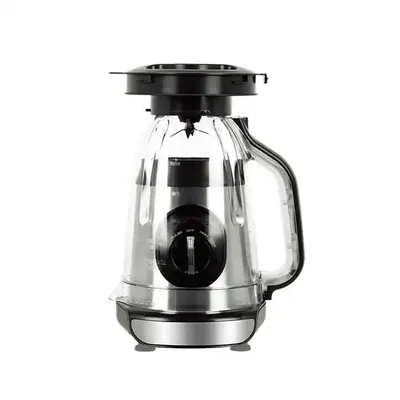
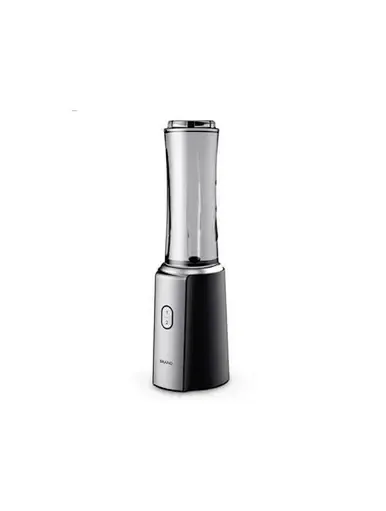
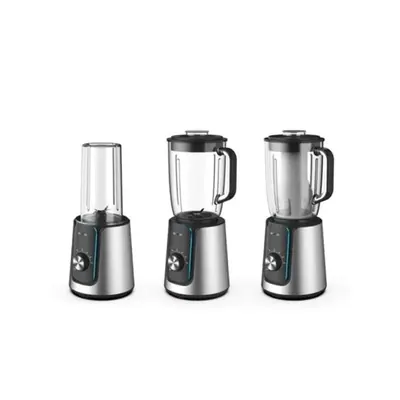
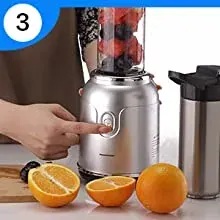
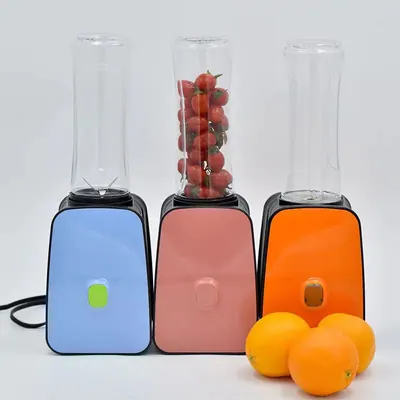
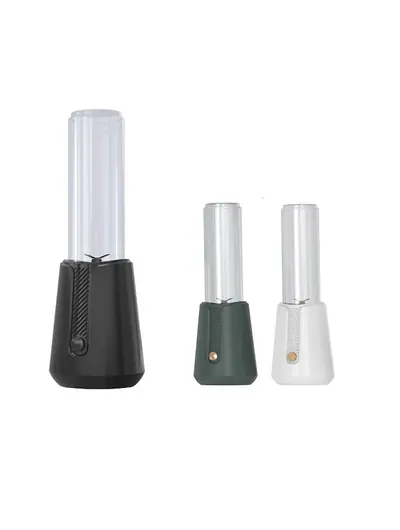
Centrifugal versus slow: two mechanisms, two outcomes
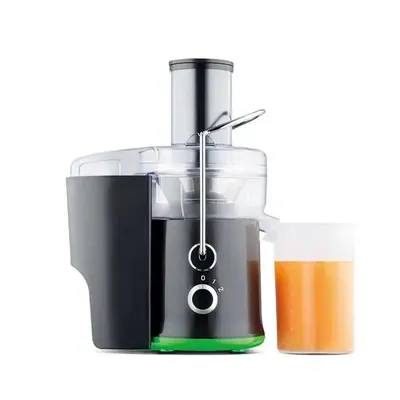
A centrifugal juicer shreds the fruit on a spinning disc and throws the juice through a mesh screen. It is fast, handles hard fruit well, and heats and aerates the juice in the process, which shortens how long it keeps. A slow juicer crushes and presses at low speed, which produces less oxidation and a drier pulp, at the cost of time and a bigger machine.
The practical difference for a buyer is yield and shelf life. A slow juicer typically gets several percentage points more juice from the same fruit, and the juice holds in a fridge noticeably longer. A centrifugal unit wins on speed and on price, and for a household that drinks juice immediately, that is a fair trade.
| Type | Speed | Yield | Juice keeping | Where it belongs |
|---|---|---|---|---|
| Centrifugal | Fast — seconds per glass | Lower, wetter pulp | Shorter, more oxidation | Value and mainstream retail |
| Slow masticating | Slow — 1–3 minutes | Higher, drier pulp | Longer | Premium, health-focused |
| Twin-gear press | Slowest | Highest | Longest | Premium, commercial-adjacent |
Pulp dryness is the honest measure of efficiency
The way to judge a juicer is not how much juice came out of one apple but how wet the pulp is. Wet pulp means juice was thrown away with the fiber. A well-adjusted slow juicer leaves pulp that crumbles; a centrifugal unit leaves pulp that drips.
This matters commercially because yield is the customer's running cost. A unit that leaves 15% of the juice in the pulp is, over a year of daily use, more expensive than one that costs twice as much and leaves 5%.
Feed chute size decides whether the product gets used
A wide feed chute takes a whole apple; a narrow one requires cutting everything into pieces. That single difference decides whether the machine is used daily or put in a cupboard, and it is a tooling decision, not an accessory.
A wider chute costs more in motor torque and in the strength of the cutting parts, because the machine has to bite a bigger piece. It also increases the safety requirement: the chute has to be long enough that a hand cannot reach the auger, or have an interlocked cover.
Cleaning time is the other half of the decision
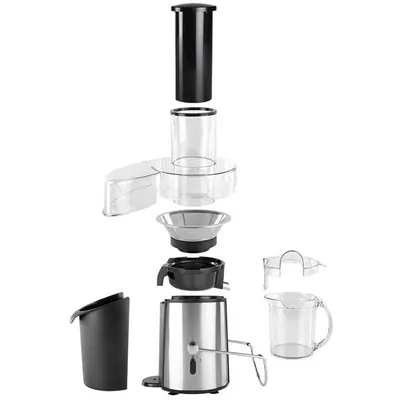
A juicer has a screen or a mesh that clogs with fiber, and that screen is the part that makes people stop juicing. A screen that can be rinsed under a tap in under a minute, and a pulp container that does not have a narrow corner, are worth more than an extra hundred watts.
Design decisions that help: a coarse pre-filter, a screen with a smooth backing, and a brush supplied with the machine. None of those cost much and all of them affect how often the product is used.
Market configuration at a glance
| Market | Voltage | Plug | What changes |
|---|---|---|---|
| EU / UK | 220–240 V | C / F, G | Food-contact declaration, WEEE, noise declaration |
| North America | 110–120 V | A / B | Higher current; the same motor power needs a bigger supply |
| Japan | 100 V | A | Re-rated motor; torque at low speed is the challenge |
| SE Asia | 220–240 V | C / G | Hard fruit and high ambient; larger feed chute wanted |
Juicer questions buyers ask
Does more wattage mean more juice?
No. Wattage determines how much torque is available under load, which matters for hard vegetables, but yield comes from the extraction method and the pulp dryness. A 200 W slow juicer can yield more than a 1000 W centrifugal one.
Why is my juice separating?
Because it was aerated and heated by a fast spinning disc, so the pulp and the water separate sooner. Slow-pressed juice separates more slowly, which is one of the reasons the slower machines exist.
How wide should the feed chute be?
Wide enough for a whole apple or a whole carrot. A narrow chute is cheaper to build and is the single most common reason a juicer stops being used after a month.
What should be measured on a sample?
Yield percentage on a fixed weight of the same fruit, pulp moisture, juice temperature rise, and cleaning time with a stopwatch. Those four numbers predict how the product will be reviewed.
Tell us centrifugal or slow, the fruit you expect the customer to juice and the feed chute size you want, and we will quote the screen and the motor torque as the two lines that decide the yield.
Need help choosing?
Send us the product type, target market and estimated volume — we will shortlist models and quote.