Humidifier OEM & ODM
15 humidifier models, in ultrasonic, evaporative and steam formats, with tank sizes from desktop to room scale. Humidifiers are sold on mist output and reviewed on something else entirely, and the question a buyer should ask before choosing a technology is what is in the customer's water.
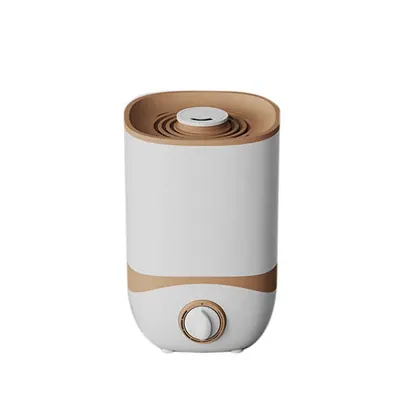
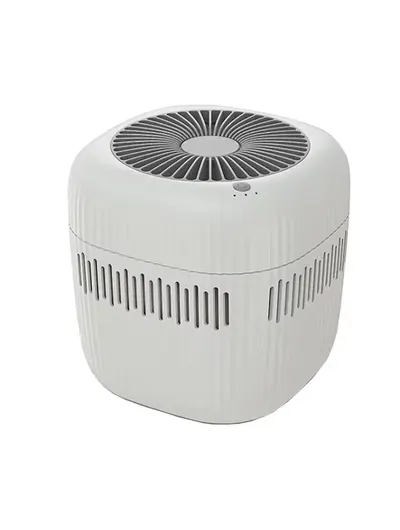
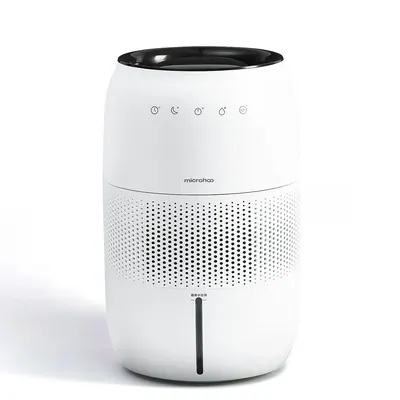
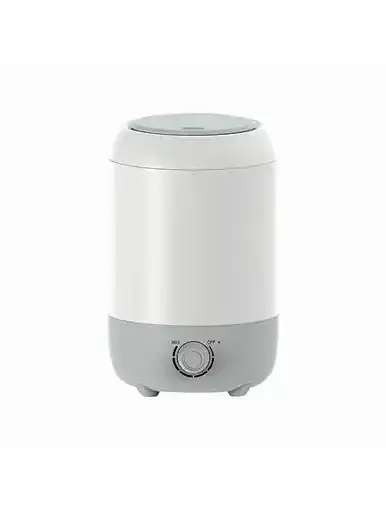
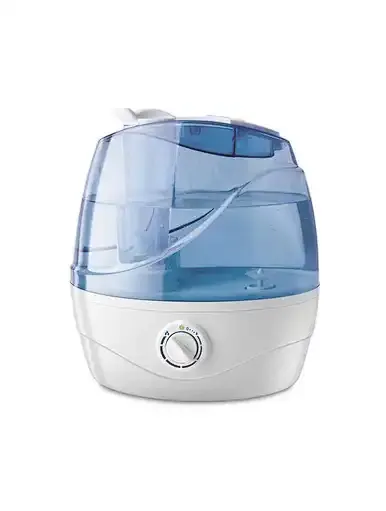
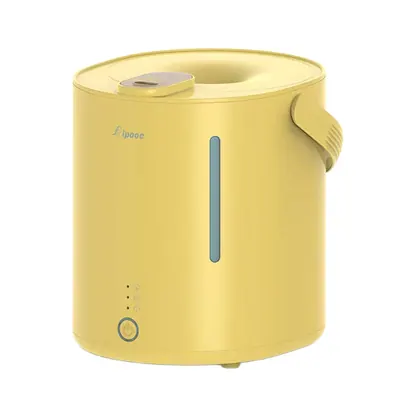
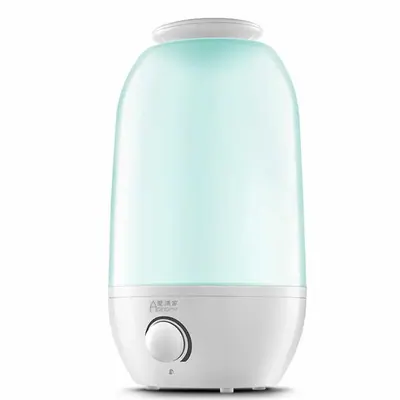
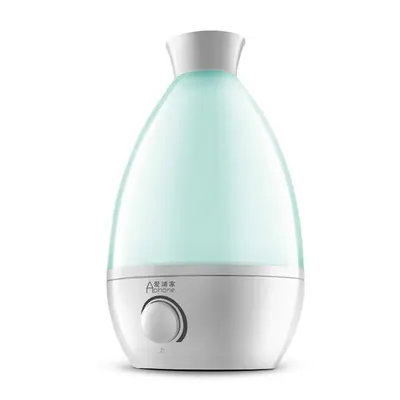
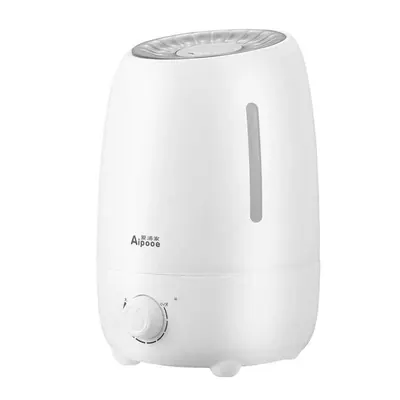
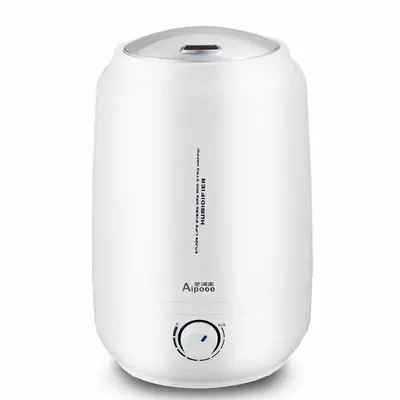
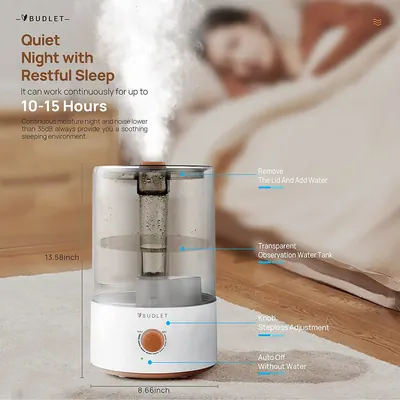
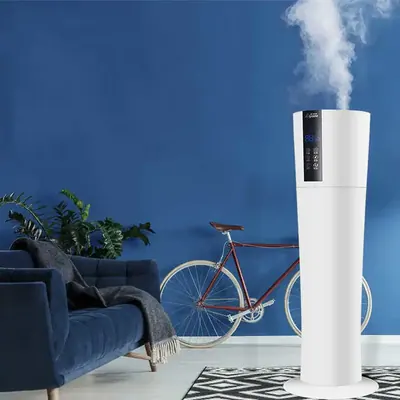
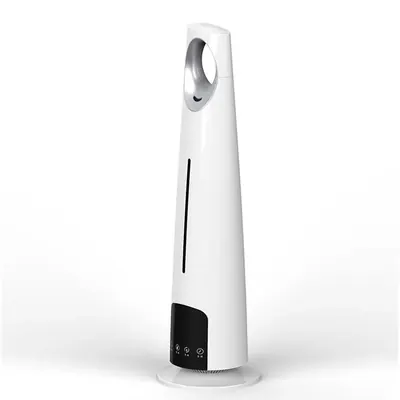
The three technologies behave differently in the same room
| Technology | How it works | What the customer experiences |
|---|---|---|
| Ultrasonic | A vibrating plate breaks water into a fine mist that is blown into the room | Very quiet, visible mist, and a low power draw. With hard water it also throws the minerals in the water into the air as a fine white dust |
| Evaporative | Air is drawn through a wick that is wet with water, and the moisture leaves as vapor | No visible mist and no mineral dust, because the minerals stay in the wick. It is slower, and the wick is a consumable |
| Steam | Water is boiled and the vapor released | Effective and hygienic, and it uses considerably more power than the other two. The vapor is warm, which is either the point or a problem depending on the room |
None of these is simply better. The choice follows from the room, the water and whether the customer minds a visible mist.
Hard water and white dust
Ultrasonic humidifiers put into the air whatever was dissolved in the water, and in a hard-water area that is a visible white deposit on surfaces near the unit. Customers frequently read it as a fault in the humidifier rather than a property of their water, and it is the most common reason an ultrasonic unit is returned.
The design responses are a demineralisation cartridge in the tank, a filter, or a recommendation in the manual to use distilled or filtered water. The cartridge is the more useful of the three because it works without the customer changing their behavior, and it is also a consumable line, which is the same commercial structure as a water filter or a vacuum filter.
An evaporative humidifier avoids the problem entirely, because the minerals stay behind in the wick rather than being thrown into the air. The trade is that the wick has to be replaced, and the customer has to accept a slower, invisible effect.
Specification decisions that move the unit cost
| Decision | What it changes | Why it moves the price |
|---|---|---|
| Technology | Ultrasonic, evaporative, or steam | Each has a different component set and a different power draw, and it is the largest single cost decision in the category |
| Output | Millilitres per hour, and whether it is adjustable | A higher output needs a larger transducer or a stronger element, and an adjustable output adds a controller |
| Tank | Volume, fill method, and whether it is removable | A removable tank is easier to fill and to clean, and it adds a seal and a release; a tank that is difficult to empty develops a smell |
| Filter or cartridge | Whether a demineralisation cartridge or wick is fitted | It addresses the white dust problem, and it is a consumable line as well as a component |
| Hygrostat | Whether the unit senses room humidity and switches itself | Adds a sensor and firmware, and it is what stops a room from being over-humidified |
| Noise | Transducer or fan noise, and how the housing damps it | Ultrasonic units are quiet except for the water; evaporative units have a fan, which is the part customers hear |
| Cleaning access | Whether the tank and the base can be reached and dried | The part that decides whether the product smells after a season, and it is a moulding decision |
Cleaning, and the smell that ends the product's life
A humidifier holds standing water at room temperature, which is an environment in which things grow. A unit that is not emptied and dried develops an odour, and the odour is then distributed into the room — which is the opposite of why the customer bought it.
The design decisions that determine how that plays out are how easily the tank can be emptied completely, whether the base can be reached and wiped, and whether there is anywhere water sits that cannot be got at. A tank with a narrow neck and a moulded base that traps a shallow pool is a tank that will smell.
The manual matters here as much as the design, because the routine is what prevents the problem. Instructions to empty and dry the unit between uses, and to clean the tank at a stated interval, reduce the returns considerably — and a product that is easy to empty is one the customer will actually empty.
Voltage, plug type and compliance by market
We do not pre-certify every SKU. Testing and certification are arranged for the specific model and the specific market you are ordering for, and quoted as their own line, with water-contact material documentation for the tank, base and any cartridge.
| Market | Voltage and plug | What is usually required |
|---|---|---|
| European Union | 220–240V, CEE 7/7 (Schuko) | CE marking with test reports behind it, plus water-contact material documentation for the tank and base |
| United Kingdom | 230V, BS 1363 (Type G) | UKCA marking with the test reports and the same material documentation |
| North America | 110–120V, NEMA 1-15 or 5-15 | Listings that retailers and marketplaces accept before the product can be sold |
| Australia and New Zealand | 230–240V, AS/NZS 3112 (Type I) | Electrical safety approval and water-contact material documentation |
| Middle East and Southeast Asia | 220–240V, plug type varies by country | Depends on the destination; conformity documents are frequently required at customs |
Branding, packaging and the consumable line
Humidifiers are bought on appearance as much as on output, and they sit visibly in a room, which makes the housing finish and the light — many models glow when running — part of the product rather than decoration. Pad printing and silk screen suit plastic housings, and a translucent tank is itself a branding surface on most models.
The consumable is the commercial opportunity: demineralisation cartridges, wicks and cleaning solutions can all be supplied as their own line with their own packaging. As with water filters, whether they are proprietary or cross-compatible is a decision worth making before the tank is tooled.
Packaging follows the channel: a color box for retail, a plain carton for marketplace shipping. Both are proofed before production and the artwork proof is free.
Humidifier questions buyers ask
Which technology should we choose?
It depends on the market and on the water. Ultrasonic is quiet with a visible mist and throws minerals into the air where the water is hard. Evaporative produces no white dust because the minerals stay in the wick, at the cost of a consumable wick and a slower effect. Steam is effective and uses considerably more power.
How do we deal with white dust?
By fitting a demineralisation cartridge or a filter, or by telling the customer to use distilled or filtered water. The cartridge is the more useful of the two because it works without changing the customer's behavior, and it is also a consumable line.
Why do humidifiers start to smell?
Because water is left standing at room temperature. A tank that is easy to empty completely, a base that can be wiped, and no trapped pool anywhere are what prevent it — and the manual routine matters as much as the design, because a product that is easy to empty is one the customer will empty.
What is the minimum order for a humidifier?
It is quoted per model, because it depends on the model and on how much of it is already tooled. Both the minimum order quantity and the lead time are stated on the quotation for the specific model you pick.
Do the humidifiers come with certification?
We do not claim blanket certification across the catalog. Electrical certification and the water-contact material documentation for the tank and base are arranged for the specific model and the specific market you are ordering for.
Can the cartridges be supplied under our brand?
Yes. Cartridges, wicks and cleaning solutions can be quoted as their own line with their own packaging, which is how most buyers turn a seasonal appliance sale into a repeat purchase.
If the humidifier you need is not in this list, send the specification — technology, output, tank size and whether a cartridge is required — and we will tell you what is available.
Need help choosing?
Send us the product type, target market and estimated volume — we will shortlist models and quote.