Handheld Garment Steamer OEM & ODM
A handheld garment steamer is bought to remove creases in a minute, and it only does that if the steam is dry enough not to soak the fabric and hot enough to relax the fibers before the water lands.
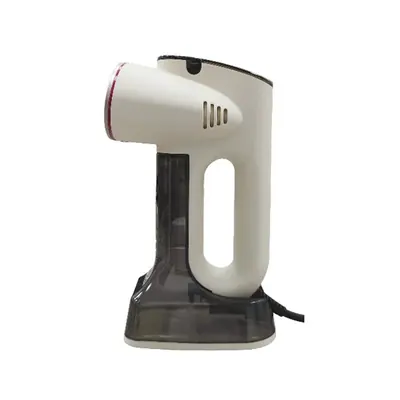
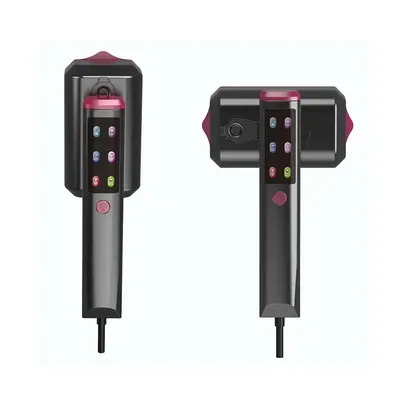
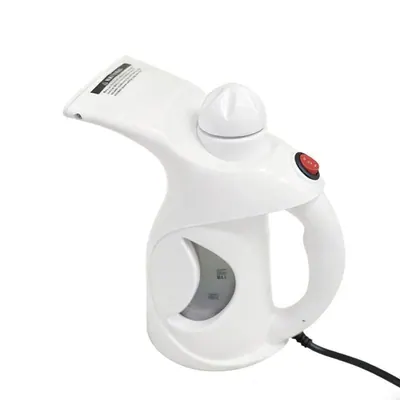
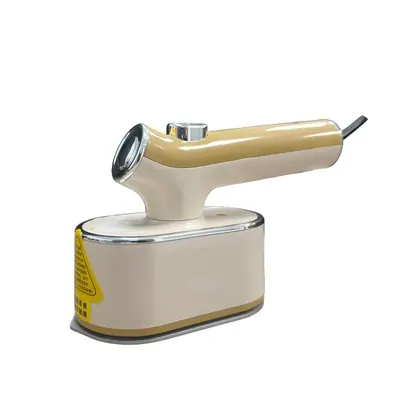
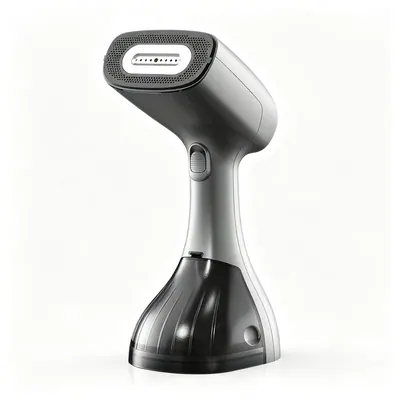
Dry steam and the distance to the fabric
A steamer that spits water spots the garment. The difference is in the heating chamber and the nozzle: a chamber that fully vaporises the water and a nozzle that lets any condensate fall back produce a dry plume. A short warm-up is convenient but often means the chamber is small and the first bursts are wet.
The head shape decides how the steam reaches a collar or a cuff. A wide head covers a jacket back quickly; a narrow head gets into seams. A brush attachment helps on heavier fabrics and should be removable for delicates.
Tank, run time and the vertical hold
A handheld steamer is held above the garment, so weight in the hand matters. A tank that sits low in the body keeps the center of gravity near the grip; a tank at the top makes the unit tip forward. Run time is quoted at continuous steam, and ten minutes is enough for a shirt and a jacket.
A stand or a hook in the box is a small addition that makes the product usable without a dedicated steaming board. It also protects the buyer from steaming a garment flat on a bed, which is the most common way to get a wet patch.
Fabric types and what should not be steamed
Cotton, linen, wool and most synthetics respond well. Waxed cotton, some suede finishes and glued trims do not. A label on the unit and in the manual listing what to avoid prevents damage claims and is a genuine part of the product.
A steamer with a low setting is useful for delicates and for curtains in place. The low setting is also where a unit's control quality shows: a cheap unit only has on and off, and on is too much for a silk shirt.
Specification by market
| Market group | Voltage | Plug | Common format |
|---|---|---|---|
| UK / Europe | 230 V | Type G / Type F | Handheld, brush attachment |
| 120 V markets | 120 V | Type A / Type B | Handheld, stand included |
| Japan | 100 V | Type A | Compact handheld |
| Australia / NZ | 230 V | Type I | Handheld, travel pouch |
Private label decisions that show on the shelf
The body is held in the hand, so the finish is felt before it is seen. A soft-touch grip and a balanced body justify a higher price more than an extra attachment. Color choice is a fashion decision in this category.
Carton artwork should show the steamer on a hanging shirt, with the brush attachment beside it. A travel pouch supports the second use case, which is business travel.
Handheld steamer questions buyers ask
Can it replace an iron?
For most garments, yes; for a sharp crease in trousers, no. The steamer relaxes fibers; the iron sets a fold.
Why does it spit water?
Condensate in a chamber that is not hot enough, or the unit tilted too far. A dry-steam design and holding it upright fix it.
Is it safe on all fabrics?
Not on waxed or glued materials. A low setting and a list of fabrics to avoid cover the rest.
Tell us the fabric mix in your market and the accessory set you want, and we will quote the chamber, the nozzle and the packaging as separate lines.
Need help choosing?
Send us the product type, target market and estimated volume — we will shortlist models and quote.