Food Waste Disposer OEM & ODM
A food waste disposer is judged in two ways that pull against each other: how fine it grinds and how quietly it does it. The grind comes from the swivel lugs and the ring; the noise comes from the housing and the motor mount, and most units are designed for one of the two.
Food Waste Disposer OEM & ODM: models, specifications and MOQ
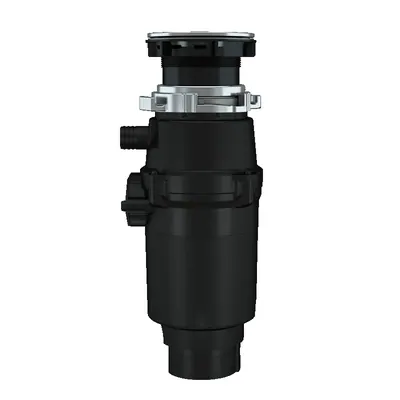
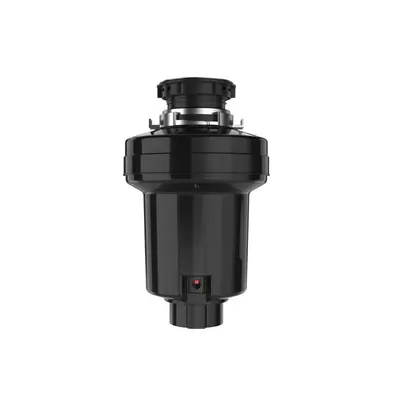
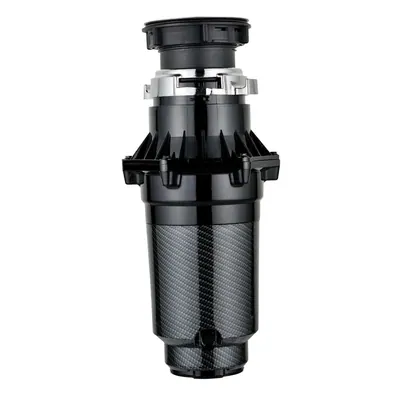
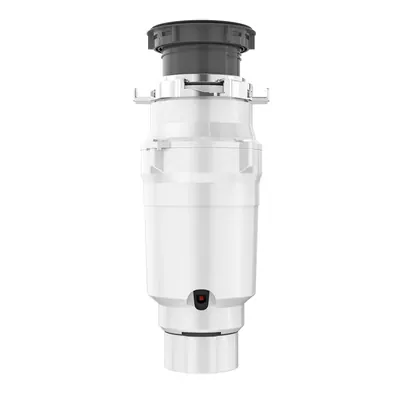
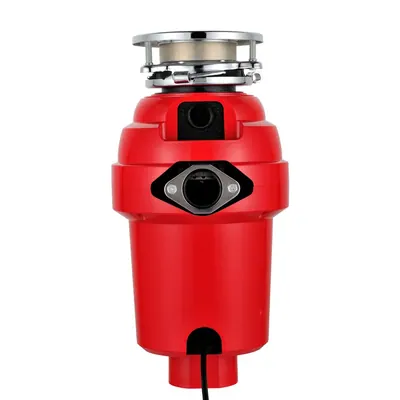
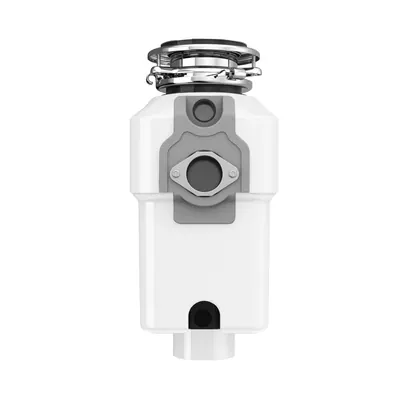
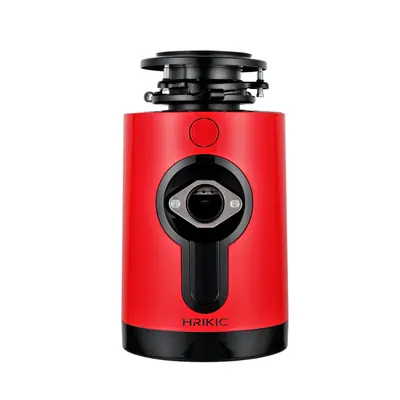
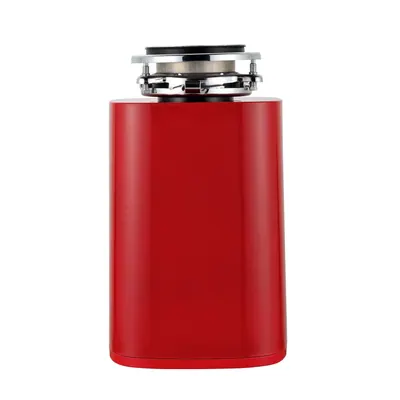
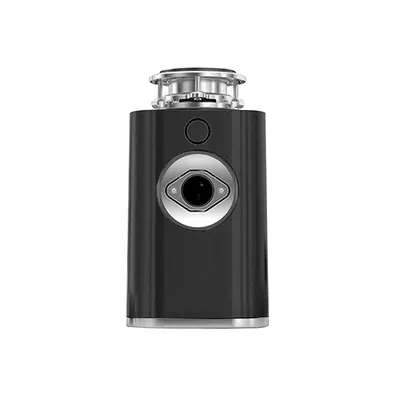
Grinding is a two-stage process
The first stage is the spinning plate with swivel lugs that break food against a stationary ring; the second is the centrifugal force that pushes particles through the ring's slots once they are small enough. A unit with a sharp ring and free-swinging lugs grinds fine at low rpm; a unit with a dull ring needs more speed and noise to achieve the same result.
That is why the specification is not 'horsepower'. Two units rated at the same power can differ in fineness by a factor, and fineness is what decides whether the drain blocks downstream.
Continuous feed versus batch feed
A continuous-feed unit runs with the stopper out and food going in, which is faster and the standard in most of Europe. A batch-feed unit only runs with the stopper locked in place, which is safer for households with children and is the dominant design in North America for that reason.
The choice is a compliance and a market expectation, not a performance one. A batch-feed unit in a European kitchen reads as inconvenient; a continuous-feed unit in a US retail channel reads as unsafe.
| Type | How it runs | Safety | Market |
|---|---|---|---|
| Continuous feed | Stopper out, food added while running | Requires care; no interlock | EU, Asia |
| Batch feed | Stopper locked before it runs | Interlocked, safer for households | North America |
| Manual reverse | Switch reverses rotation | Clears jams without tools | Both, on better units |
The motor, the mount and the noise path
A permanent-magnet motor is small and light and is enough for a household unit; an induction motor is quieter, heavier and longer-lived, and it is what the premium units use. The difference is audible within a second of switching on.
Noise travels through the housing and through the sink mount. A rubber or thermoplastic mount between the body and the sink removes a large part of it, and a housing with an inner liner removes more. Both are cheap compared with a better motor.
What it does to the plumbing, honestly
A disposer puts ground food into the drain line, so the pipe has to be able to carry it. That means adequate fall, a trap that will not silt up, and enough water flow — the rule of thumb is to run cold water for as long as the grinding takes and a few seconds after.
Cold water matters because it keeps fats solid so they are carried rather than melted onto the pipe wall. For a brand selling into old-building markets, this is a specification to state in the manual, not a footnote.
Market configuration at a glance
| Market | Voltage | Plug | What changes |
|---|---|---|---|
| North America | 110–120 V | A / B | Batch feed dominant; larger flange standard |
| EU / UK | 220–240 V | C / F, G | Continuous feed; local wiring rules for a fixed appliance |
| Japan | 100 V | A | Re-rated motor; smaller capacity typical |
| Australia / NZ | 230–240 V | I | Continuous feed, plumbing rules vary by state |
Food waste disposer questions buyers ask
Does horsepower decide the grind?
No. Fineness comes from the ring and the swivel lugs and the clearance between them. A well-made 0.5 hp unit can grind finer than a cheap 0.75 hp one.
Continuous or batch feed?
Batch feed where safety expectations are high, which is most of North America; continuous feed where convenience is expected, which is most of Europe and Asia. The interlock is the difference, not the motor.
Why does it jam?
Usually fibrous food — celery, corn husks, onion skin — packed into the ring slots. A reversing switch clears it without tools, and it is worth having on any unit sold into a household that cooks vegetables.
What should be measured on a sample?
Particle size after grinding a fixed sample, time to clear it, noise at one meter with and without the sink baffle, and current draw at load. Particle size is the number that predicts drain problems.
Tell us continuous or batch feed and the sink flange standard for the market, and we will quote the ring and lug set as the line that decides the grind.
Need help choosing?
Send us the product type, target market and estimated volume — we will shortlist models and quote.