Food Dehydrator OEM & ODM
A dehydrator is sold on tray count and wattage, and neither of those decides whether the top tray dries at the same speed as the bottom one. What decides it is airflow across every tray, and that is a housing and fan decision that is invisible on the box.
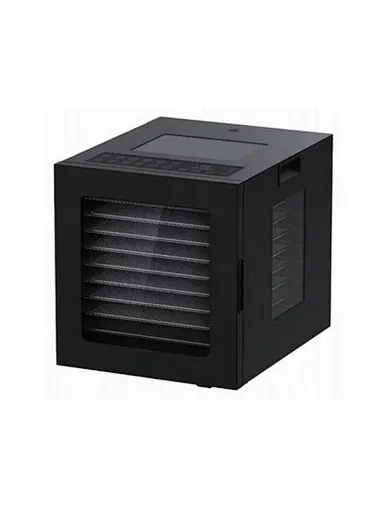
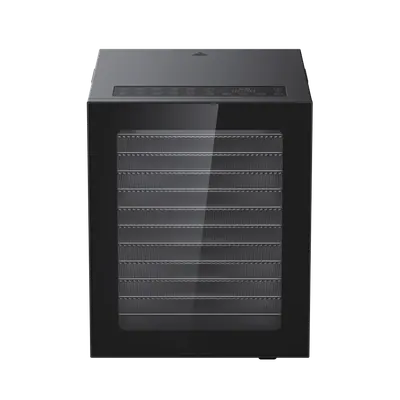
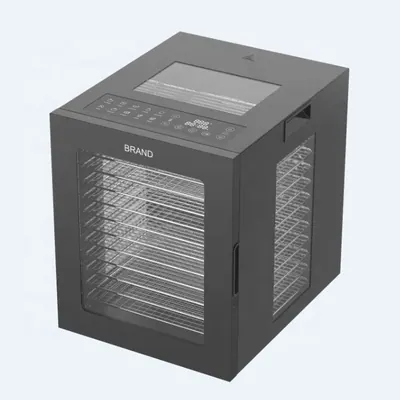
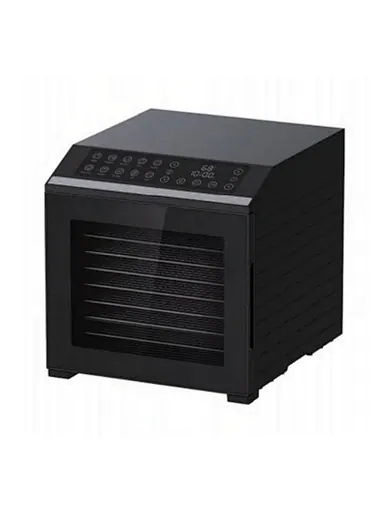
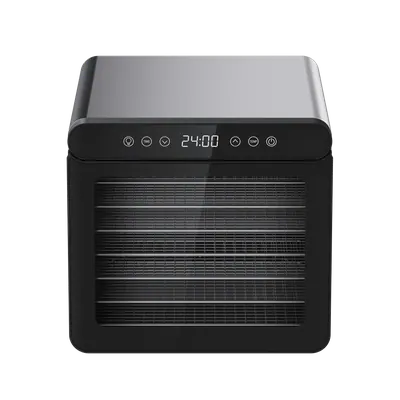
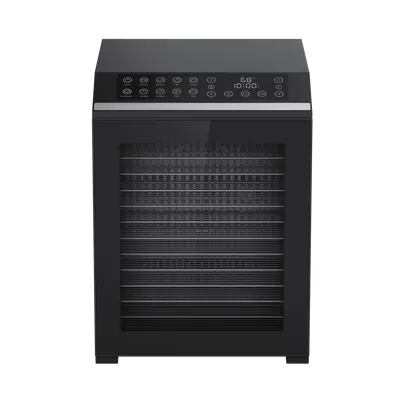
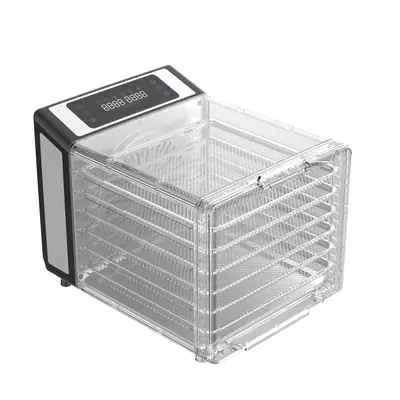
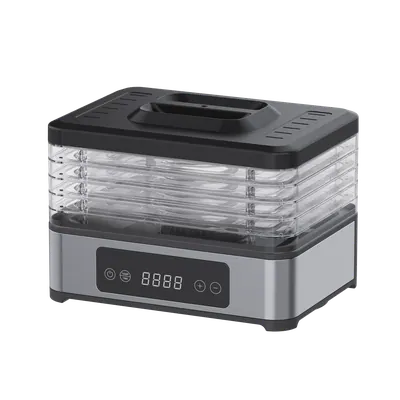
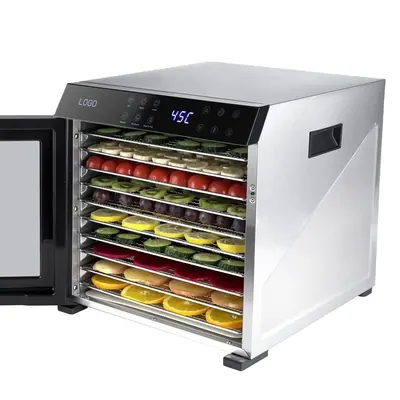
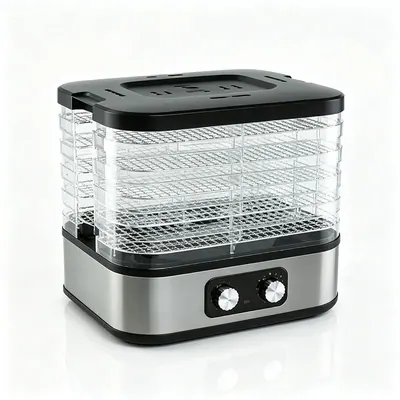
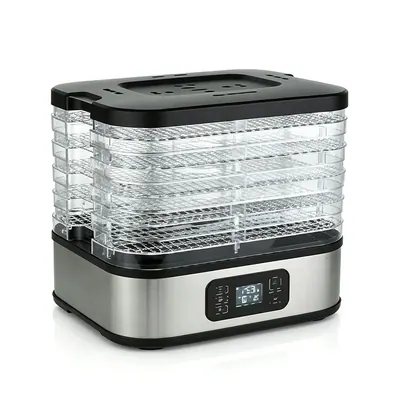
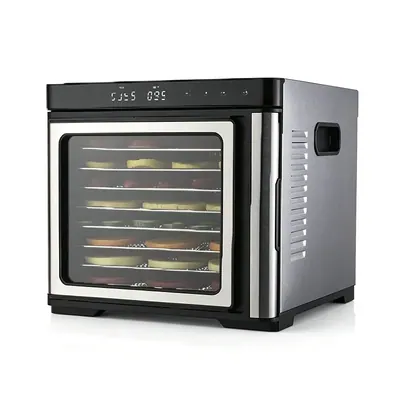
Uniformity is the specification nobody quotes
A dehydrator's job is to remove water at a steady rate from every tray at once. If the airflow reaches the bottom tray and not the top, the customer rotates trays and the batch takes as long as the slowest one. That is the single most common complaint in the category and it is a duct problem, not a wattage problem.
The two layouts that work are a horizontal airflow across stacked trays, and a vertical flow with a plenum on one side. A cheap unit with a fan at the back and no plenum pushes air into the middle of the stack and leaves the trays above and below it slower.
Temperature range matters more than maximum temperature
Different foods need different temperatures: around 40 to 45 °C for herbs and flowers, 50 to 55 °C for vegetables, and 60 to 70 °C for meat jerky. A unit with a thermostat at 35–70 °C can do all of it; a unit with a fixed 60 °C can only do one thing.
The thermostat is also the safety story for meat. Drying meat at too low a temperature in a humid chamber is a bacterial risk, which is why the better units hold 60 °C steadily rather than cycling between 50 and 70. A mechanical thermostat that swings 20 °C is cheap and is the wrong choice for a product sold into a jerky market.
| Food | Temperature | Time (approx.) | What the unit needs |
|---|---|---|---|
| Herbs and flowers | 40–45 °C | 2–4 h | Low, stable heat and gentle airflow |
| Vegetables | 50–55 °C | 6–10 h | Even airflow across trays; timer |
| Fruit leather | 55–60 °C | 6–8 h | Flat tray liners and steady temperature |
| Jerky | 60–70 °C | 4–6 h | Tight thermostat control and good airflow |
| Yoghurt | 40–45 °C | 8–12 h | Very stable low temperature |
Tray geometry: area beats count
A nine-tray unit with small trays holds less than a six-tray unit with large ones. What matters is total drying area and the gap between trays: too small a gap and the airflow cannot pass, so the trays in the middle dry slowest and the extra trays are wasted.
Two to three centimeters of clear space per tray is the practical minimum, and it is why tall-tray designs exist for jerky. A brand that sells tray count without quoting area is selling a number that does not describe capacity.
The parts that fail: fan, element, timer
The fan runs for hours at a time in warm, humid air, which is the hardest duty in the appliance. A sleeve-bearing fan is quiet when new and noisy within a year; a ball-bearing fan costs more and lasts. The element is usually the most reliable part; the timer is the second most common failure, because a mechanical timer is a wear item.
A digital control with a thermal cut-out costs more than a mechanical dial and removes both the timer wear and the guesswork. For a retail product it is usually worth it, because the customer leaves the machine running unattended for eight hours.
Market configuration at a glance
| Market | Voltage | Plug | What changes |
|---|---|---|---|
| EU | 220–240 V | C / F | Food-contact declaration for trays, energy and material labeling |
| UK | 220–240 V | G | Same plus the fused plug |
| North America | 110–120 V | A / B | Higher current; the same wattage takes longer to reach temperature |
| Japan | 100 V | A | Re-rated element and fan |
| Australia / NZ | 230–240 V | I | Insulated pins, food-contact labeling |
Dehydrator questions buyers ask
Does more wattage mean faster drying?
Only if the airflow can carry the moisture away. Extra wattage in a unit with poor circulation just makes the middle trays hotter and the top ones no faster. Airflow across every tray is what shortens a batch.
How many trays do I need?
Judge by total drying area and tray spacing, not by count. Trays closer than about 2 cm apart block the airflow and the middle ones dry slowest, so a nine-tray unit with tight spacing can hold less usable food than a six-tray one.
Can one unit do herbs and jerky?
Yes, if the thermostat covers roughly 35–70 °C and holds it. Herbs need 40–45 °C; jerky needs 60–70 °C with a stable thermostat, because drying meat too cool in a humid chamber is a bacterial risk.
What fails first?
The fan, then the timer. The fan runs for hours in warm humid air, which is hard on sleeve bearings; a ball-bearing fan lasts far longer. A mechanical timer is a wear item, which is why digital controls are worth the extra cost.
Send the foods you intend to support and the batch size you want per load, and we will tell you which airflow layout and tray spacing meets it before you commit to tooling.
Need help choosing?
Send us the product type, target market and estimated volume — we will shortlist models and quote.