Electric Water Dispenser Pump OEM & ODM
A countertop water pump looks like a commodity and fails like one: the parts that decide its life are the tube, the check valve and how the unit behaves when the bottle runs dry. None of those appear in a specification sheet, and all three are what customers complain about.
Electric Water Dispenser Pump OEM & ODM: models, specifications and MOQ
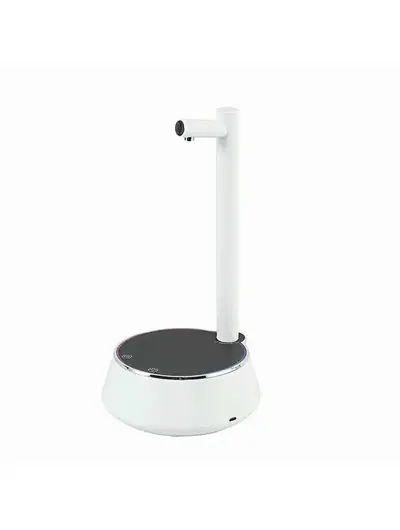
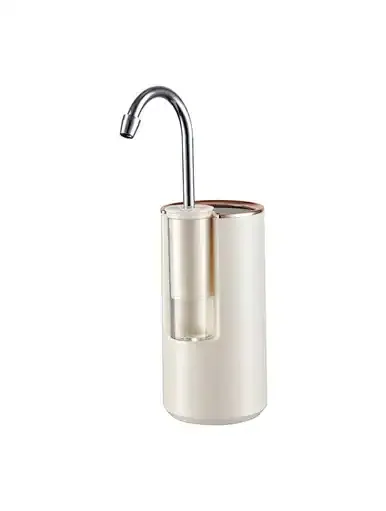
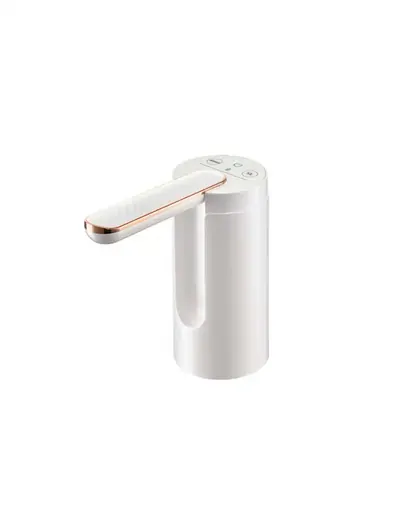
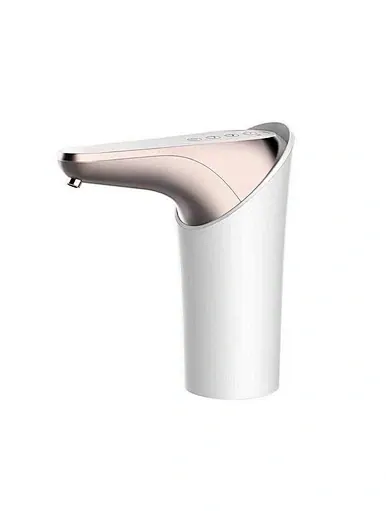
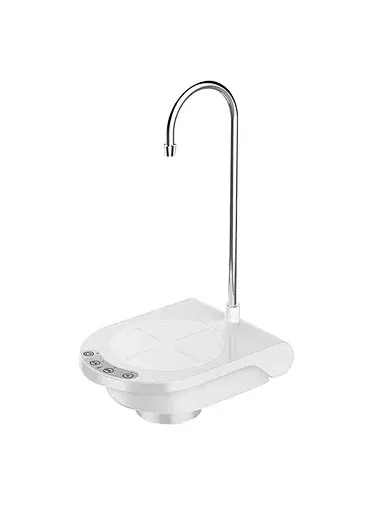
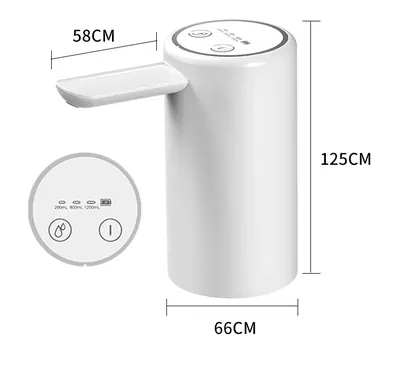
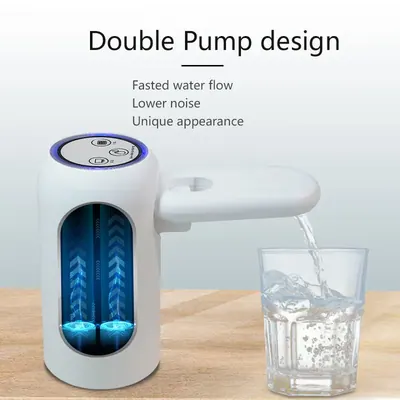
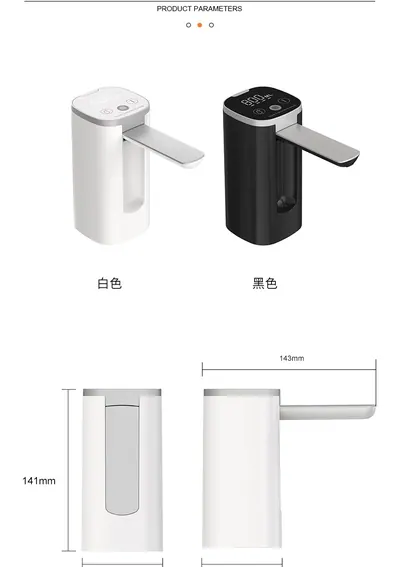
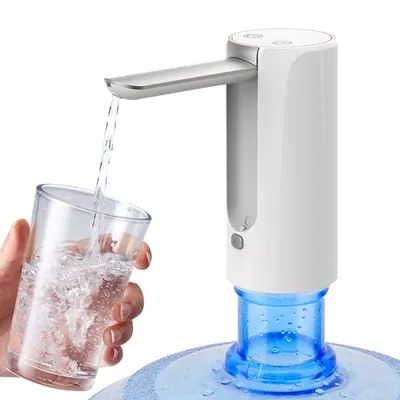
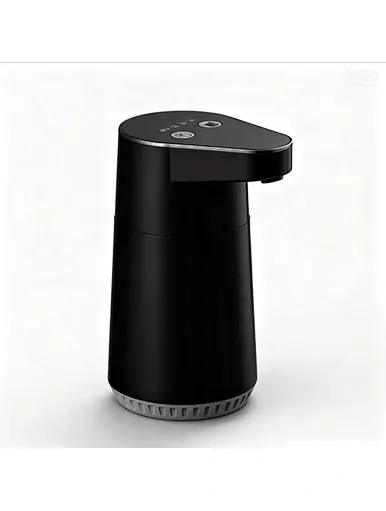
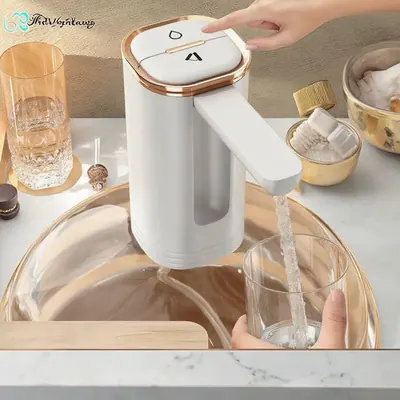
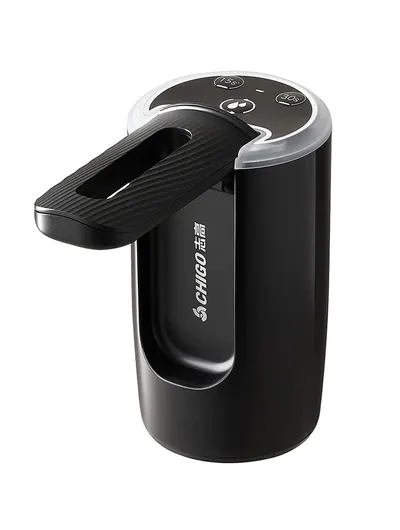
Suction lift is the number that explains most complaints
A dispenser pump has to lift water from a bottle that sits below the spout, sometimes 40 to 60 cm below on a floor-standing bottle. That lift, not the motor's rated power, sets the flow a customer actually gets. A pump rated at 1.5 L/min on the bench can deliver half that on a tall bottle with a long tube.
The practical specification is flow rate at the worst case the product will see: maximum lift, tube at full length, and a partially filled bottle. If that number is acceptable, the product is fine; if the supplier only quotes the bench number, the complaint arrives from the customers with the tallest bottles.
The tube is a food-contact part and a wear part at the same time
The suction tube touches drinking water for its whole life and flexes every time the bottle is changed. That makes it a food-contact material and a wear item, and the choice is narrow: food-grade silicone is the usual answer, because it stays flexible at low temperature and does not impart taste.
Tube wall thickness matters more than most buyers expect. A thin wall kinks when the bottle is pushed back into place, and a kinked tube stops the pump priming — which reads as a broken unit. A thicker wall with a coil or a weighted foot at the end keeps the inlet at the bottom of the bottle and avoids both problems.
| Part | What it does | Failure mode to design against |
|---|---|---|
| Suction tube | Carries water from the bottle | Kinks on re-seating; hardens with age |
| Check valve | Stops water running back | Scale or debris holds it open, so priming fails |
| Diaphragm pump | Moves the water | Runs dry and over-travels when the bottle empties |
| Dry-run sensor | Cuts the pump when there is no water | Absent on cheap units, which is why they die early |
| Spout / outlet | Delivers the water | Drips after use if there is no anti-drip valve |
Dry-run protection is worth more than any extra feature
Every one of these units will be run with an empty bottle, because the customer cannot see the water level through an opaque bottle. A pump without dry-run protection runs at full speed with no water to cool or lubricate it, and the diaphragm or the motor is damaged within minutes.
The cheap version of the protection is a current or temperature cut-out on the motor; the better version is a flow or pressure sensor that stops the pump and lights an indicator. Both are far cheaper than the returns they prevent, and the indicator is what stops the customer pressing the button again.
Battery or mains, and what each one changes
A battery unit is placed anywhere and needs no outlet, which is why it dominates the countertop segment. It also introduces the two things that generate the most support requests: charging (USB-C versus a barrel jack) and battery aging, because a lithium cell that sits at full charge in a warm kitchen loses capacity faster than the customer expects.
A mains unit has no battery to age but needs the machine to sit near an outlet, and it must meet the same standby and safety requirements as any other mains appliance. For a brand selling into several markets, the battery version is usually the simpler certification path and the mains version the simpler supply chain.
Market configuration and the bottle standards
| Market | Voltage | Bottle standard | What changes |
|---|---|---|---|
| North America | 110–120 V or battery | 3 and 5 gallon | Cap adaptor geometry is the usual fit problem |
| EU / UK | 220–240 V or battery | 5 gallon and 19 L | Food-contact declaration, WEEE registration |
| Japan | 100 V or battery | 12 L and 19 L | Re-rated motor at the lower voltage |
| Middle East / SE Asia | 220–240 V or battery | 19 L dominant | Dust and heat tolerance wanted; longer tube |
Water dispenser pump questions buyers ask
Why does my pump take a long time to start?
It is priming: the pump has to pull air out of the tube before water arrives. A check valve that seats properly and a tube that is not kinked shorten that to a couple of seconds; a worn valve or a kinked tube makes it take much longer, or never finish.
Is a food-grade tube enough for compliance?
It is the beginning. The material needs a declaration for the markets you sell into, and the housing and the spout are also in contact with water or with the water path. A single tube certificate does not cover the product.
How long should a battery charge last?
Long enough that the customer stops thinking about it: several weeks of normal household use. The number that matters is milliamp-hours per liter pumped, and it is worth asking a supplier to state it rather than the battery capacity alone.
What fails first in service?
The check valve and the tube, in that order. Both are cheap to replace and both are usually not replaceable in a sealed design, which is why the design decision matters more than the component price.
Tell us the bottle format, the market and whether the unit is battery or mains, and we will quote the pump, the tube specification and the dry-run protection as separate lines.
Need help choosing?
Send us the product type, target market and estimated volume — we will shortlist models and quote.