Electric Vegetable Cutter OEM & ODM
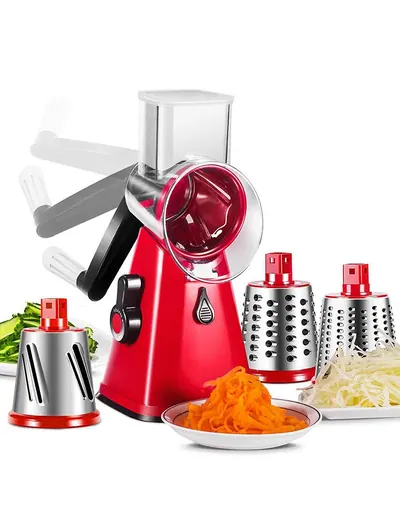
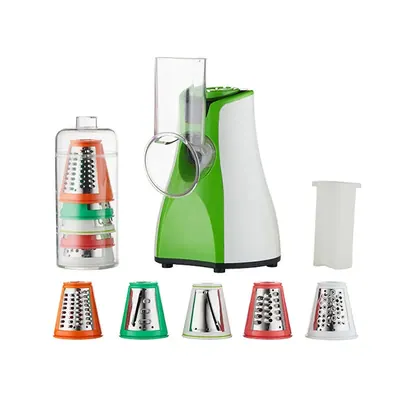
An electric vegetable cutter is a motor and a disc, and the disc is the product. Shredding, slicing and grating are different cuts produced by different discs, and a machine sold with one disc is a machine that does one job — which is why the disc set, not the motor, decides how often it is used.
The disc decides the cut, and the motor only has to keep up
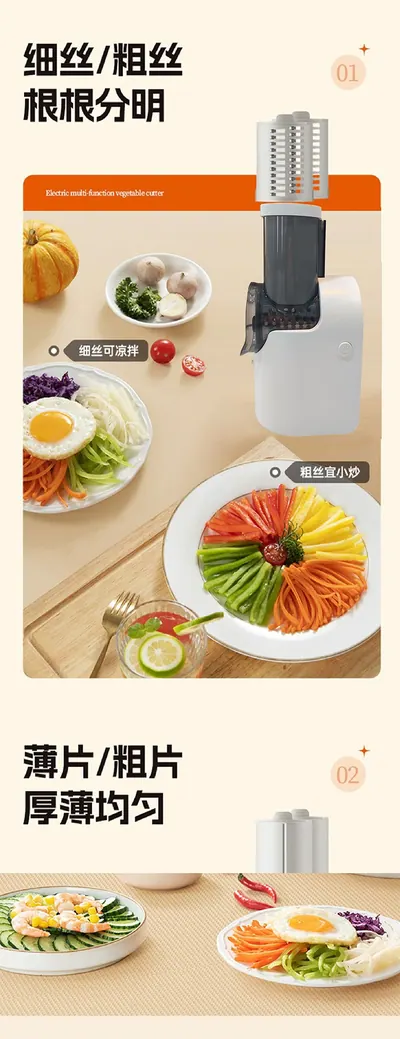
A slicing disc uses a single blade set at an angle; a shredding disc uses multiple teeth; a grating disc uses small holes with burrs. The quality of the cut comes from the sharpness and the angle of those features, and the motor only has to maintain speed under load.
That is why a 150 W machine with a sharp disc cuts better than a 300 W machine with a dull one. It is also why the disc material matters: stamped steel loses its edge, and a dull shredding disc tears vegetables and releases water.
Feed chute size and the shape of the pusher
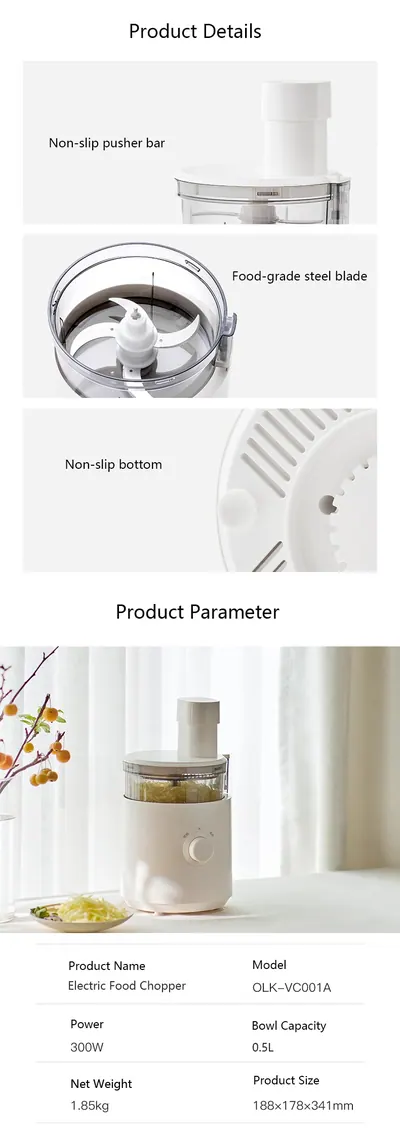
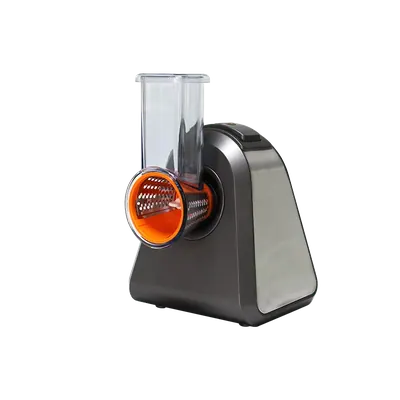
A round feed chute takes a potato; a narrow one requires cutting everything first, which defeats the purpose. The pusher also matters: a pusher with a shaped end holds a carrot lengthways, which is how you get long slices rather than short ones.
A wide chute increases the torque needed and increases the safety risk, so it comes with an interlock and often a two-part pusher with a small inner tube for thin items.
| Disc | Cut | Best for | Wear |
|---|---|---|---|
| Slicing (adjustable) | Slices 1–6 mm | Potato, cucumber, onion | Blade edge |
| Shredding (coarse/fine) | Strips | Carrot, cheese, cabbage | Teeth |
| Grating | Fine particles | Parmesan, ginger, garlic | Holes clog, need cleaning |
| Julienne | Matchsticks | Courgette, carrot | Teeth break if forced |
Cleaning is the decisive feature
Every disc has to be washed by hand, and a disc with a guard or a plastic hub is harder to clean than a flat one. A machine that takes thirty seconds to disassemble and has flat discs gets used; one with a complex hub does not.
The bowl and lid must be dishwasher-safe where the market expects it, and the discs usually are not — which the manual has to say clearly, because a warped disc from a dishwasher is a common return.
Safety interlock and the switch that fails
The lid interlock prevents the machine running with the chute open. A mechanical pin that engages the switch is the cheapest version and wears; a magnetic interlock has no wearing parts and is the better answer for a plastic lid.
The switch itself is the most common electrical failure, because it is pressed repeatedly with wet hands. A sealed tactile switch and a splash-proof housing are worth more than an extra disc in the box.
Market configuration at a glance
| Market | Voltage | Plug | What changes |
|---|---|---|---|
| EU / UK | 220–240 V | C / F, G | Food-contact declaration, WEEE, noise declaration |
| North America | 110–120 V | A / B | Higher current; larger chute common |
| Japan | 100 V | A | Re-rated motor; torque at low speed is the limit |
| SE Asia | 220–240 V | C / G | Hard vegetables; stronger motor and metal hub wanted |
Vegetable cutter questions buyers ask
Does more wattage cut better?
No. The cut comes from the disc's sharpness and angle; the motor only has to hold speed. A sharp disc on a modest motor outperforms a dull disc on a powerful one, and it does not tear the vegetable.
How many discs should be in the box?
At least slicing and shredding, because those are the two cuts people actually use. A single-disc machine does one job, and the disc set is what decides whether it stays on the counter.
Can the discs go in a dishwasher?
Usually not — most are hand-wash only, and a dishwasher warps them or dulls the edge. The manual has to say so clearly, because a warped disc is a common return.
What fails first?
The lid interlock and the switch. Both are pressed repeatedly with wet hands, and a mechanical pin wears until the machine runs with the chute open.
Tell us which cuts you need and the chute size, and we will quote the disc set and the interlock as separate lines.
Need help choosing?
Send us the product type, target market and estimated volume — we will shortlist models and quote.