Electric Pressure Cooker OEM & ODM
An electric pressure cooker is bought for speed and kept for safety. The parts that decide both are the pressure it actually holds, the lid interlock, and the gasket that seals it — and the gasket is a consumable that most buyers only discover at the first leak.
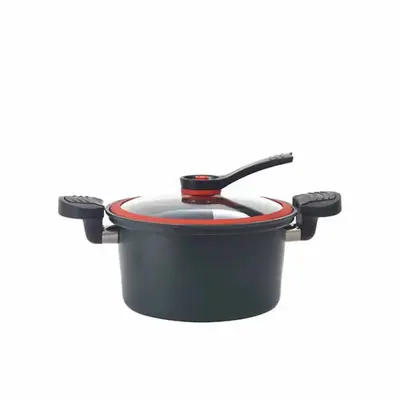
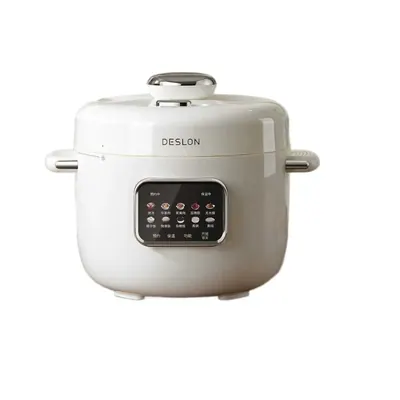
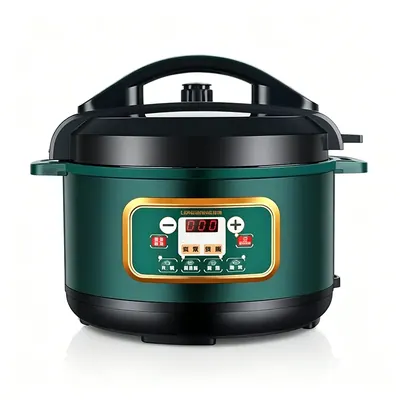
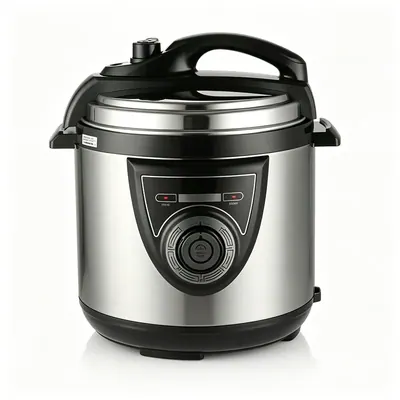
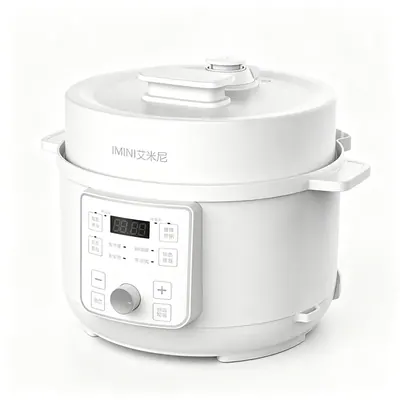
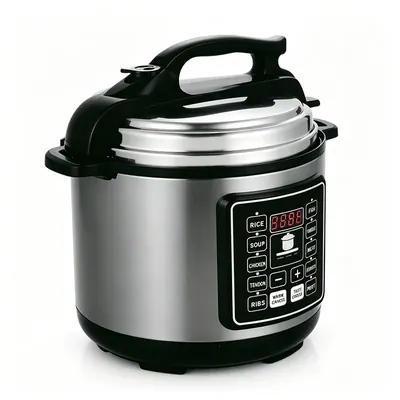
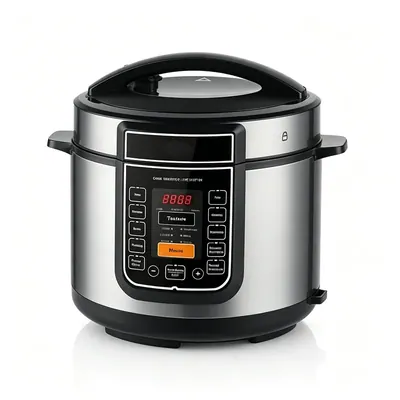
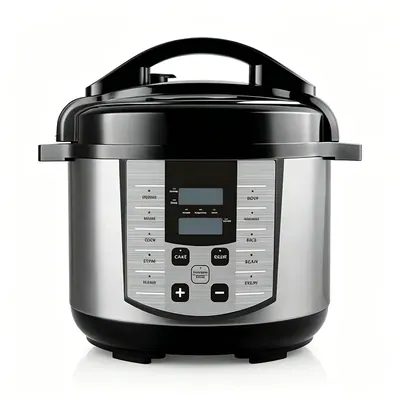
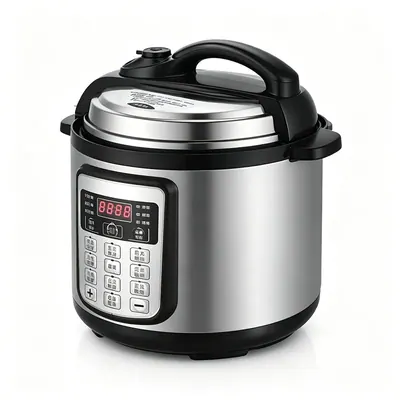
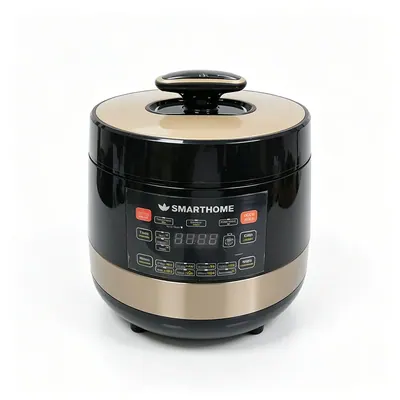
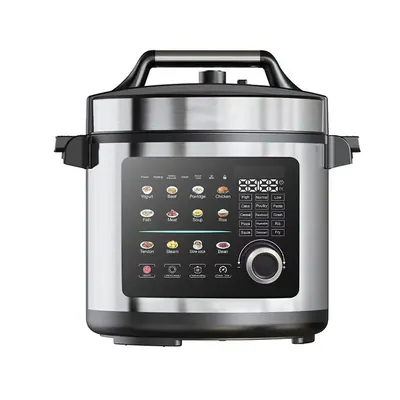
Working pressure, and why 70 and 80 kPa are different products
Home pressure cookers run at roughly 70 to 80 kPa above atmospheric, which corresponds to about 115 to 120 °C inside. That difference matters for cooking time: at 80 kPa a stew that takes 25 minutes at 70 kPa may take 18, and the recipe books written for one setting are wrong for the other.
The pressure is set by the pressure-regulating valve and the control board's heater duty, not by the pot. A brand that states 'high pressure' without a number is leaving the customer to discover the difference on a recipe, which is why the better products print the working pressure and the corresponding temperature.
The lid interlock is the safety feature, and it has to fail safe
A pressure cooker holds significant stored energy. The interlock has to prevent the lid being opened while there is pressure inside, and it has to prevent the unit building pressure if the lid is not correctly seated. Those are two different mechanisms and both are needed.
The cheap approach is a single microswitch on the lid. The better approach is a mechanical stop plus a pressure sensor plus a thermal cut-out, so a single failure does not remove protection. This is the one area where the component cost difference is worth paying without argument: a pressure cooker failure is a burn, not a return.
| Safety element | What it prevents | What happens if it is left out |
|---|---|---|
| Lid interlock (mechanical) | Opening under pressure | Scalding steam release at the lid |
| Pressure sensor + control cut-out | Over-pressure from a stuck heater | Relief valve vents continuously; gasket fails early |
| Thermal fuse | Dry burn if the pot is empty | Element and housing damage |
| Lid gasket (silicone) | Steam leak at the rim | Long cook times, then no pressure at all |
| Relief valve | Any over-pressure that gets past the controls | Seal or housing failure |
The gasket is a wear item and should be sold as one
The silicone ring at the lid is what holds the pressure, and it hardens and takes a set over time. Most 'my cooker stopped working' cases are a gasket that no longer seals, and the fix is a part that costs very little.
A brand that sells the replacement gasket, and designs the lid so it can be changed without tools, keeps its customers for years. A brand that seals the lid keeps them for one product cycle and then loses them to whoever sells the spare.
Inner pot: coating, thickness, and the induction question
The inner pot takes the heat and the washing. An aluminum pot with a non-stick coating is light and cheap and scratches if the customer uses metal utensils; a stainless pot is durable and needs more care to avoid sticking; a clad stainless pot with an aluminum core heats more evenly and costs more.
If the product is sold as induction-compatible, the pot base needs a magnetic layer. That is a materials decision taken at the pot, not the appliance, and it is usually the difference between a cooker that works on an induction hob and one that is only for its own base.
Market configuration at a glance
| Market | Voltage | Plug | What changes |
|---|---|---|---|
| EU / UK | 220–240 V | C / F, G | Pressure-vessel and electrical requirements, WEEE, local-language manual with recipes |
| North America | 110–120 V | A / B | Higher current; usually 6 or 8 quart sizes |
| Japan | 100 V | A | Re-rated heater; pressure settings often reduced |
| South Korea | 220 V | C / F | KC marking, strict lid-interlock review |
| Middle East | 220–240 V | C / G | Larger capacities, rice-cooking programs expected |
Pressure cooker questions buyers ask
Does higher pressure cook faster?
Yes, and by more than most people expect: at 80 kPa the internal temperature is about 120 °C instead of 115 °C, which shortens a stew by a quarter or more. It also means recipes written for one pressure are wrong for the other.
Why did my cooker stop building pressure?
Almost always the lid gasket. Silicone hardens and takes a set, then leaks slightly, and the unit never reaches pressure. The part is cheap, which is why it should be designed to be replaced without tools and sold as a spare.
Is a non-stick inner pot better?
It is easier to clean and scratches more easily. Stainless is more durable and needs more care with sticking; a clad stainless pot with an aluminum core is the middle option and heats most evenly.
What should be checked on a sample?
Working pressure and the corresponding internal temperature, the interlock behavior with the lid ajar, the gasket fit after several cycles, and the time from cold to pressure at a stated load.
Send the capacity, the target pressure and whether the pot must be induction-compatible, and we will quote the interlock arrangement and the gasket supply as separate items.
Need help choosing?
Send us the product type, target market and estimated volume — we will shortlist models and quote.