Electric Food Steamer OEM & ODM
A food steamer is the simplest appliance in the kitchen and the one most often mis-specified, because the tier count on the box says nothing about how much food actually cooks at the same rate.
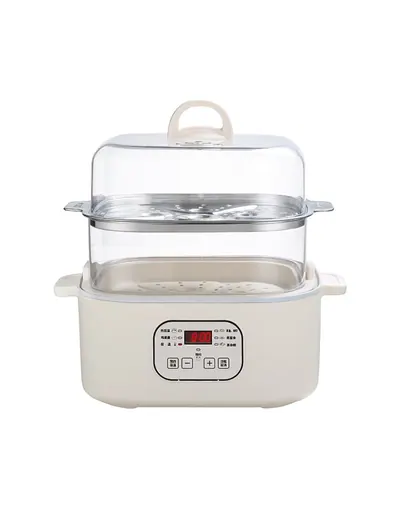
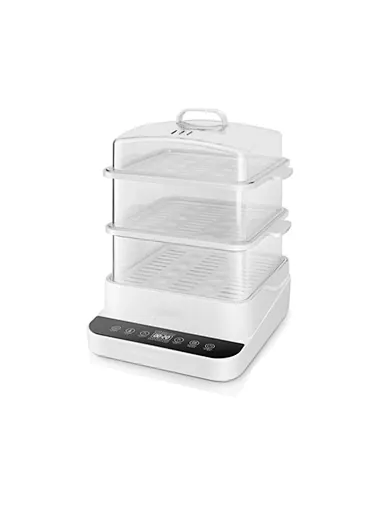
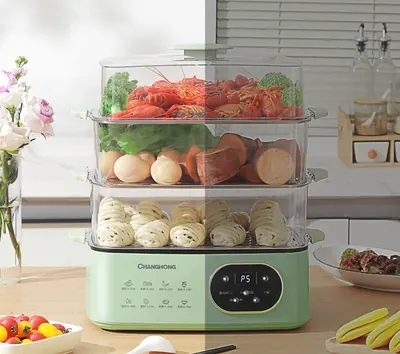
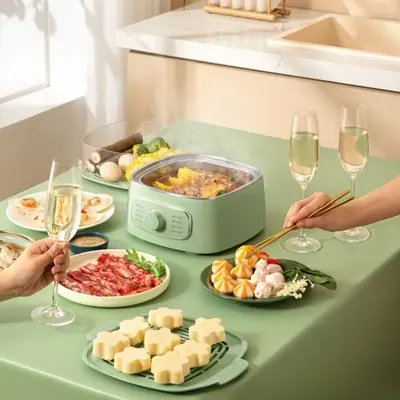
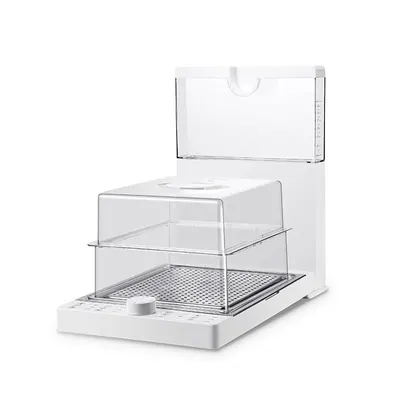
Tiers are not the same as capacity
A three-tier steamer sounds generous until one tier holds a single fillet. What matters is the usable area of each tier, the height between them, and whether the steam reaches the top tier at the same temperature as the bottom. A two-tier unit with wide trays often cooks more than a narrow three-tier one.
Steam distribution comes from the base design: a central chimney that pushes steam through each tray, and vents that let it circulate rather than jet through a single hole. A tray with a flat base cooks unevenly at the edges.
Timer, reservoir and the refill problem
Most steamers run dry if left long enough, and the safety cut-out is what stops the base from being ruined. The reservoir size decides how long a session can run: a small reservoir suits vegetables, a larger one is needed for rice or dumplings that take longer.
A visible water level is more useful than a printed maximum, because the buyer refills mid-cook. A reservoir that can be topped up without removing the trays is a design advantage worth confirming before tooling.
Rice bowls, egg trays and the accessory set
A rice bowl turns a vegetable steamer into a one-pot appliance, and an egg tray is the cheapest accessory to include. Both are moulded parts that fit the same tiers, which makes them a low-cost way to differentiate a private label.
The accessories should stack inside the unit for storage. A steamer that needs a cupboard of its own is used less than one that nests into a single footprint.
Specification by market
| Market group | Voltage | Plug | Common format |
|---|---|---|---|
| UK / Europe | 230 V | Type G / Type F | Two or three tiers, rice bowl |
| 120 V markets | 120 V | Type A / Type B | Two tiers, wide trays |
| Japan | 100 V | Type A | Compact two-tier, rice bowl |
| Australia / NZ | 230 V | Type I | Three tiers, egg tray |
Private label decisions that show on the shelf
The trays are the visible product, so a transparent tier that shows the food sells better than an opaque one. Color range in the trays and lid is the cheapest way to make one body look like several products.
Carton artwork should show a full meal across the tiers, not a single vegetable, because the product's value is cooking several things at once. The timer dial and the water window belong on the side panel.
Food steamer questions buyers ask
Do all tiers cook at the same speed?
No. The top tier runs cooler, so dense food belongs at the bottom and quick-cooking food at the top.
Can it be used for rice?
With a rice bowl and the right water ratio, yes. A dedicated rice cooker still holds temperature more precisely.
What happens if it runs dry?
A thermal cut-out should stop the element. Confirm the cut-out is resettable rather than one-time, because a one-time fuse ends the product's life.
Tell us the tier count, the accessory set and the market's voltage, and we will quote the tray tooling, the reservoir size and the carton as separate lines.
Need help choosing?
Send us the product type, target market and estimated volume — we will shortlist models and quote.