Electric Cleaning Brush OEM & ODM
An electric cleaning brush is bought to remove the scrubbing from a job, and it succeeds or fails on torque at low speed, the brush set and whether the body survives being soaked.
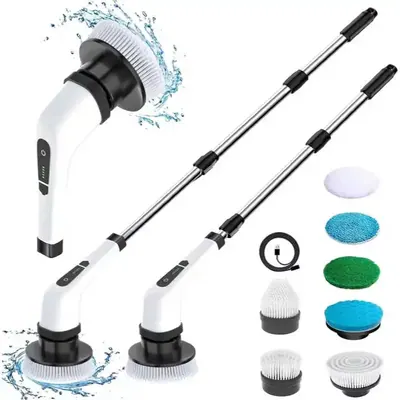
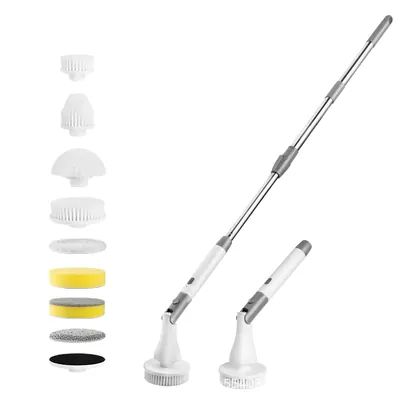
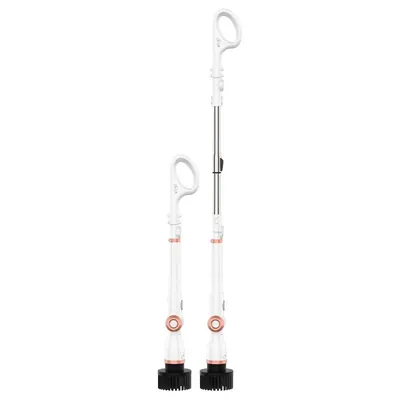
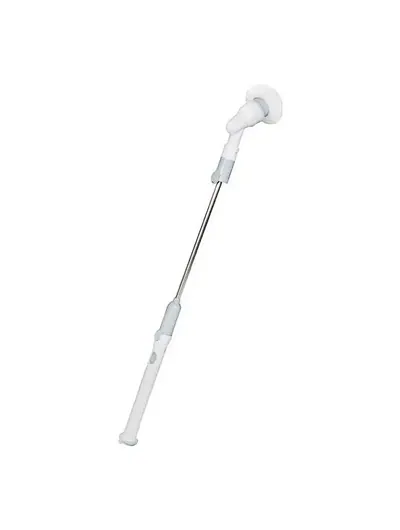
Torque at low speed is the whole product
A brush that spins fast and stalls on grout is worse than a hand brush, because the user has to press hard to keep it turning. What matters is rotational force at the speed the brush is actually used, which is low. A geared motor with a high stall torque cleans; a small motor with a high no-load speed polishes.
The head angle is the second design decision. A straight head is for flat surfaces; an angled head reaches into a sink or a shower corner. A rotating head that can be locked at an angle covers both.
The brush set is the product line
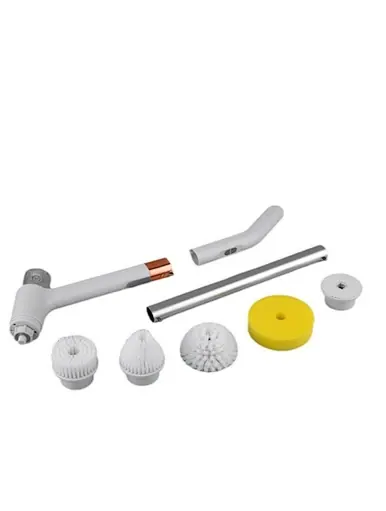
One body with four brushes is a household product; one body with one brush is a niche tool. A flat brush for tiles, a pointed brush for grout, a round brush for corners and a sponge head for delicate surfaces cover the jobs buyers recognize.
Brush attachment has to be tool-free and firm. A bayonet fitting that clicks and locks is easier to clean than a push-fit that traps water, and it is the part most likely to wear.
Water resistance, charging and the handle
The unit is used wet, so the seal at the shaft and the charging port decide its life. An IP rating appropriate to splashing, a sealed charging cover and a body that can be rinsed without water entering the motor are the specification points to confirm.
Cordless is the default format, which makes battery capacity and charge time part of the product. A unit that runs twenty minutes and charges in three hours suits a bathroom; a longer run time suits a whole-house clean. The handle should be shaped for a wet hand, with a rubberised grip that does not become slippery.
Specification by market
| Market group | Voltage | Plug | Common format |
|---|---|---|---|
| UK / Europe | 230 V (charger) | Type G / Type F | Cordless, four-brush set |
| 120 V markets | 120 V (charger) | Type A / Type B | Cordless, extendable handle |
| Japan | 100 V (charger) | Type A | Compact cordless |
| Australia / NZ | 230 V (charger) | Type I | Cordless, four-brush set |
Private label decisions that show on the shelf
The brush set is what the shopper sees first, so the carton should show all four heads and the surfaces they suit. A storage stand or a wall hook is a low-cost inclusion that keeps the brushes together.
Color coding the brushes to the jobs makes the set easier to sell and easier to reorder as accessories. The charging stand is a second branding surface.
Electric cleaning brush questions buyers ask
Will it scratch tiles?
Not with the right brush. Nylon bristles on glazed tile are safe; an abrasive pad on the same tile is not.
How long does the battery last?
It depends on the load. A brush that spins freely runs longer than one pressed into grout, which is why stall torque matters more than run time on paper.
Can the brushes be replaced?
They should be, and they should be sold separately. A brush set that cannot be replaced shortens the product's life to the life of one brush.
Send the surfaces your market cleans and the brush set you want to lead with, and we will quote the motor option, the charging stand and the carton.
Need help choosing?
Send us the product type, target market and estimated volume — we will shortlist models and quote.