Desk Fan OEM & ODM
A desk fan is judged on two things that pull against each other: how much air it moves and how little noise it makes. The answer is blade and duct geometry, not motor power, and it is the reason a 15 W fan can be both quieter and stronger than a 40 W one.

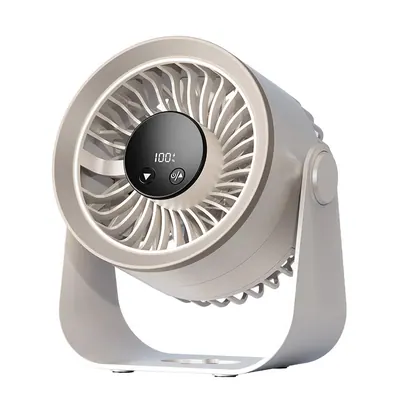
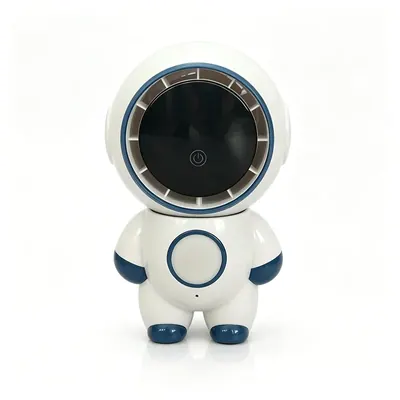
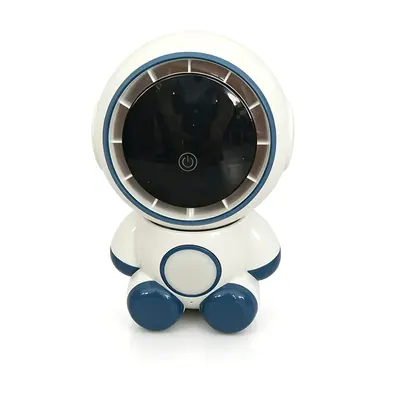
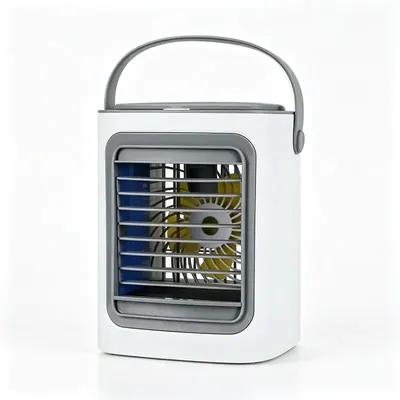
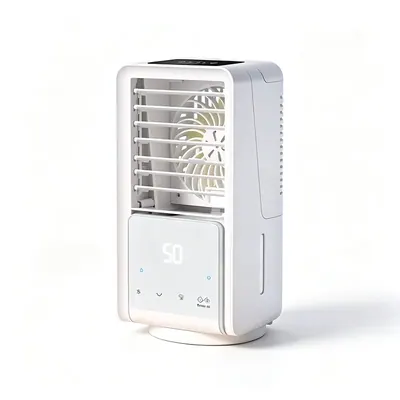
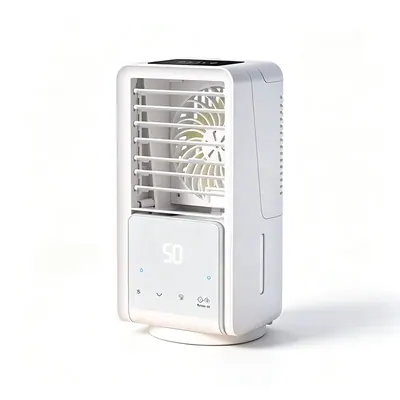
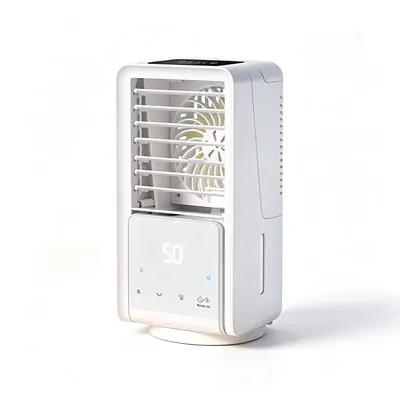
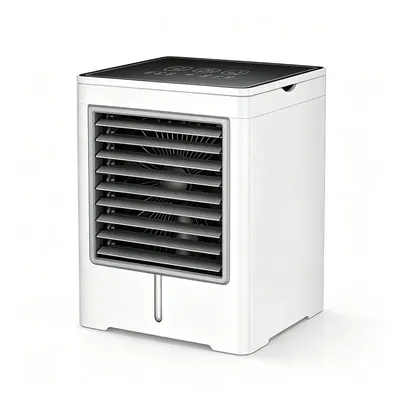
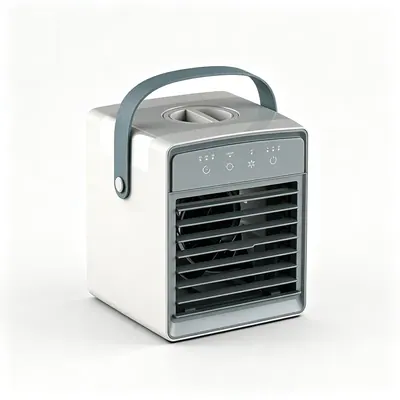
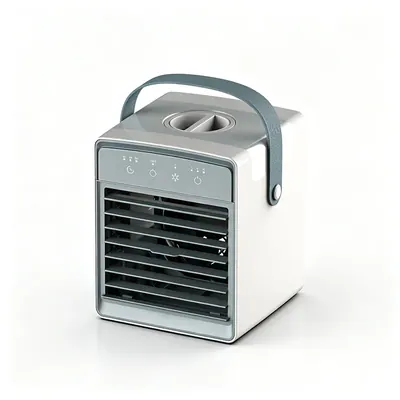
Airflow versus noise is a geometry problem
A fan moves air by accelerating it across the blades. Larger blades moving slowly shift more air at lower noise than small blades spinning fast, because most of the noise comes from tip speed and turbulence at the blade edge. That is why a 30 cm fan on low is quieter than a 15 cm fan on high while moving more air.
For a desk product the practical limit is the guard diameter and the stand. A larger guard with a well-shaped grille reduces turbulence, and a grille with widely spaced wires is quieter than a dense decorative one — which is why the quietest fans look plain.
AC or BLDC motor
An AC shaded-pole motor is cheap, runs directly from the mains, and cannot be speed-controlled smoothly; typically it has three taps and a hum. A BLDC motor needs a driver board but gives stepless speed, lower noise at low speed, and much better efficiency.
The cost difference is real and it is where a value fan and a quiet fan diverge. For a bedroom or office product the BLDC version is the one that gets recommended; for a workshop or a promotional item the AC version is the one that hits the price.
| Motor | Speed control | Noise at low speed | Efficiency | Where it belongs |
|---|---|---|---|---|
| AC shaded pole | 3 taps, audible hum | Poor — either on or off | Low | Value, workshop, promotional |
| AC with capacitor | 3 taps, smoother | Moderate | Moderate | Mainstream retail |
| BLDC | Stepless | Best | Highest | Bedroom, office, premium retail |
Oscillation is where the noise and the failures come from
An oscillating fan has a gearbox and a linkage that run continuously, and that mechanism is the most common mechanical failure. A nylon gear running against a nylon worm wears; a metal gear is louder. The better designs use a metal worm with a nylon wheel, which is quiet and durable.
Oscillation also creates a rhythmic noise that is more annoying than a steady one at the same level. Rubber mounts between the motor and the housing remove most of it, and they cost almost nothing.
Grille, guard and the safety review
The guard has to stop a finger reaching the blades, which sets the maximum gap between wires at the front and the distance from the blade plane. A decorative grille that looks better and fails the gap test is a compliance problem, and it is checked on samples.
For markets that require it, a fan also needs a stable base: a tall narrow fan that tips when a child pulls the cord is a product-safety issue. Base weight and footprint are cheap to fix at tooling and expensive to fix after a shipment is rejected.
Market configuration at a glance
| Market | Voltage | Plug | What changes |
|---|---|---|---|
| EU / UK | 220–240 V | C / F, G | Standby limit if remote-controlled, noise declaration, WEEE |
| North America | 110–120 V | A / B | Higher current; typically larger blade diameter |
| Japan | 100 V | A | Re-rated motor; airflow falls noticeably at 100 V |
| India / SE Asia | 220–240 V | C / D / G | Higher ambient, longer cord, often 400 mm blades |
| Middle East | 220–240 V | C / G | Dust tolerance and higher ambient rating wanted |
Desk fan questions buyers ask
Why is a bigger fan quieter?
Because it moves the same air at a lower blade speed. Most fan noise comes from tip speed and edge turbulence, so a larger blade turning slowly is quieter than a small blade turning fast for the same airflow.
Is BLDC worth the extra cost?
For a product sold on quietness, yes: stepless speed, lower noise at low settings and better efficiency. For a workshop or promotional fan, the AC version is the one that meets the price.
What breaks first on an oscillating fan?
The oscillation gear. A nylon worm wears against a nylon wheel; a metal worm against a nylon wheel is both quieter and longer-lived. The motor itself usually outlives the mechanism.
What should be measured on a sample?
Airflow at each speed, noise at one meter on the lowest and highest settings, oscillation noise, and the guard gap against the applicable standard. Those four cover most of what a review and a compliance check will ask.
Tell us the blade size, the noise target and the market, and we will tell you whether an AC or BLDC motor is the right route before you commit to the tooling.
Need help choosing?
Send us the product type, target market and estimated volume — we will shortlist models and quote.