Dehumidifier OEM & ODM
A dehumidifier is specified in liters per day, and that number is measured at a temperature and humidity most rooms never see. The gap between the label and the room is what buyers complain about, and it is decided by the compressor, the coil area and how the unit decides when to stop.
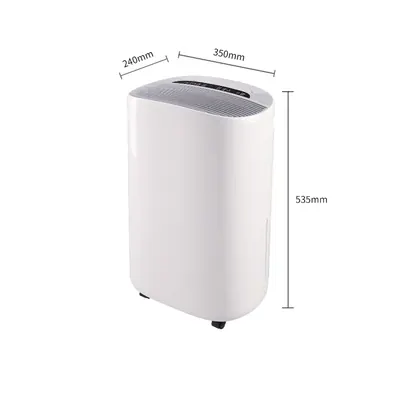
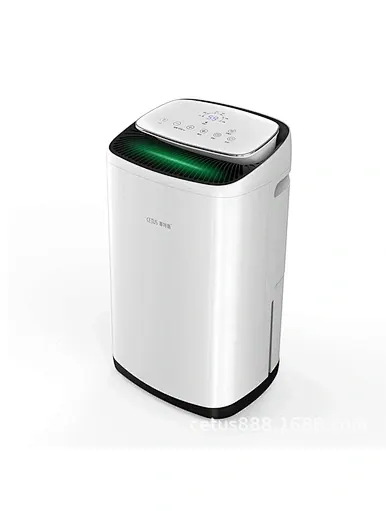
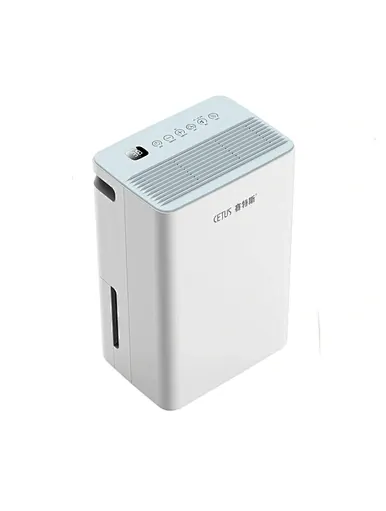
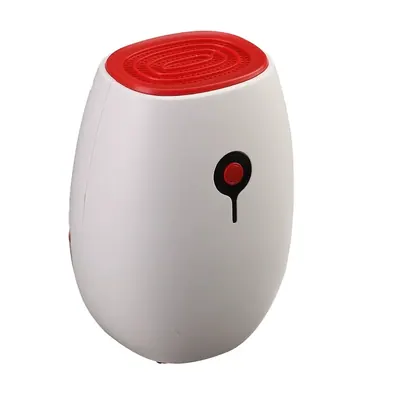
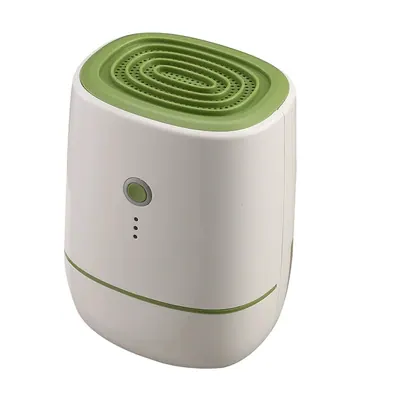
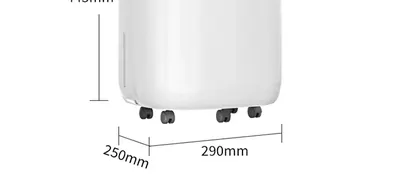
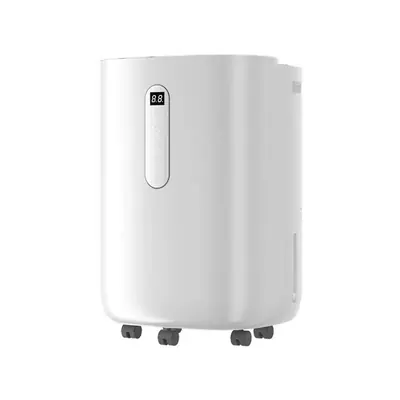
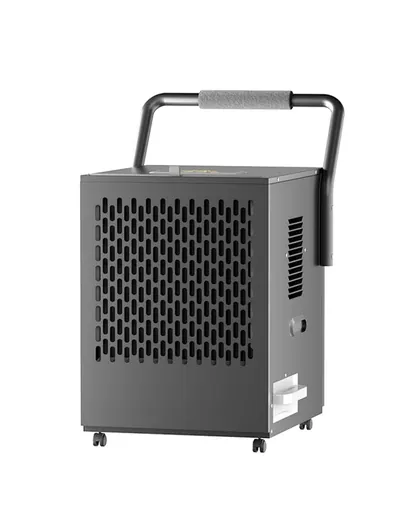

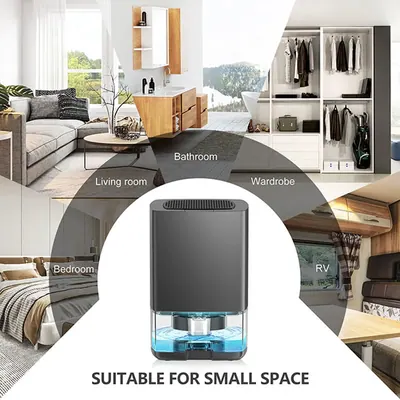

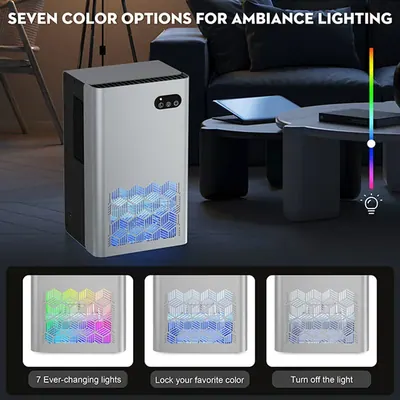
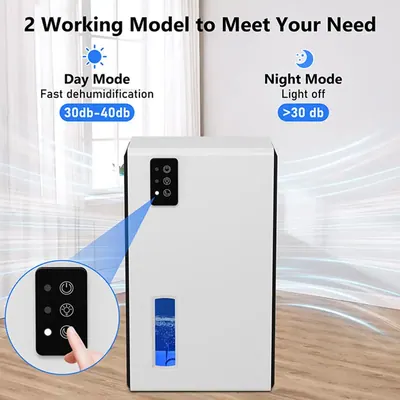
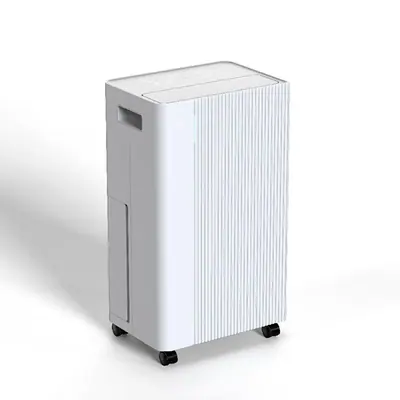
Liters per day is measured at 30 °C and 80% relative humidity
The standard rating condition for a household dehumidifier is warm and very damp. A room at 20 °C and 60% relative humidity — an ordinary damp bedroom — will see roughly half the rated extraction, and a cold room far less. That is not a defect; it is how the rating works, and it is why the honest way to specify a unit is to state the rating condition alongside the number.
For an OEM program the practical answer is to quote two figures: the rated capacity at the standard condition, and the capacity at 27 °C / 60% RH, which is closer to a real summer room. A buyer comparing brands on the box number alone will otherwise be surprised by the product in service.
Compressor, desiccant, or thermoelectric
There are three ways to remove water from air and they are not interchangeable. A compressor unit condenses water on a cold coil and is the most efficient option above about 15 °C. A desiccant rotor adsorbs water and regenerates with a heater, which keeps working at low temperature but costs more to run. A thermoelectric (Peltier) unit is tiny and cheap and extracts very little water, which is why it belongs in a closet or a safe, not a room.
Choosing the wrong one is the most common specification mistake in this category. A compressor unit sold into an unheated garage in a cold climate will ice its coil and stop extracting; a desiccant unit sold into a warm flat will work but will cost the customer more in electricity than the water it removes is worth.
| Type | Best temperature range | Running cost | Typical capacity | Where it belongs |
|---|---|---|---|---|
| Compressor | Above ~15 °C | Lowest per liter | 10–50 L/day | Living rooms, basements in warm climates |
| Desiccant | Down to ~1 °C | Higher per liter | 5–20 L/day | Garages, boats, cold storage, unheated rooms |
| Thermoelectric | Any, but weak | High per liter | 0.3–1 L/day | Wardrobes, safes, small enclosed spaces |
The coil area is the part that is not on the label
Extraction capacity is largely a function of coil surface area and airflow across it. Two units with the same compressor and the same rated output can differ in real performance if one has a larger evaporator, because a larger coil runs colder without icing and recovers more water per pass.
Coil area is also what competes with the water tank for space inside the housing. That trade is the design decision in the product: a bigger tank means fewer empties and a smaller coil, or a bigger box. Most retail programs settle on a 2–4 liter tank and a continuous-drain option, because customers who run the unit for weeks do not want to empty it daily.
Hygrostat, humidistat, and the control that decides the electricity bill
A dehumidifier with no humidity sensor runs until the tank fills or the customer switches it off, which is why cheap units are expensive to run. A humidistat lets the customer set a target and the unit cycles to hold it; a hygrostat does the same with a mechanical element and no display.
The control matters commercially because running cost is now a purchase criterion in most markets, and the energy label is checked. A unit that holds 50% RH by cycling will use far less electricity over a season than one that runs continuously, and that is the number a buyer can verify from a meter.
Refrigerant, and why the choice is no longer free
Household dehumidifiers have moved from R134a to R290 (propane) in most markets, driven by refrigerant regulations. R290 has a much lower global warming potential, works well in small charges, and is flammable — which changes the production line, the leak testing, the labeling and the shipping documentation.
The practical effect on an order is that R290 units cannot be built on a line that has not been set up for flammable refrigerant, and the charge size is capped by the standard rather than by the design. A buyer who specifies R290 gets a compliant product and a longer lead time; a buyer who specifies R134a gets a faster build in some markets and an import problem in others.
Market configuration at a glance
| Market | Voltage | Refrigerant expectation | What changes |
|---|---|---|---|
| EU | 220–240 V | R290 standard | Energy label class, flammable-refrigerant marking, WEEE registration |
| North America | 110–120 V | R32 / R290 by class | Higher current, different plug, UL-style marking |
| UK | 220–240 V | R290 standard | Plug type G, energy label, noise declaration |
| Japan | 100 V | R134a still common in small units | Re-rated compressor and airflow at the lower voltage |
| Middle East / SE Asia | 220–240 V | Mixed | Higher ambient rating wanted, larger coil, often continuous drain |
Dehumidifier questions buyers ask
Why does my unit extract less than the label says?
Because the label figure is measured at 30 °C and 80% relative humidity. A cool room holds far less water for the coil to condense, so extraction falls — typically to about half at 20 °C and 60% RH. Ask for both figures before comparing brands.
Compressor or desiccant for a cold room?
Desiccant below about 15 °C, compressor above. A compressor unit in a cold garage will ice its coil, cycle on its defrost and extract very little, which reads as a broken product to the customer.
How big a tank should the unit have?
Two to four liters for a portable household unit, with a continuous-drain hose option. A bigger tank takes space from the coil, and a smaller one means the unit stops when it fills, which is the most common complaint in reviews.
Is R290 a problem for shipping?
It is a flammable refrigerant, so the unit is classed accordingly for transport and the charge is capped by the standard. The documentation and the packaging marking change, and the production line has to be set up for it — none of which is optional in markets that have already moved.
Tell us the room size, the climate and the target humidity and we will tell you which type fits, and what the unit will realistically extract in that room rather than on a test bench.
Need help choosing?
Send us the product type, target market and estimated volume — we will shortlist models and quote.