Cordless Vacuum Cleaner OEM & ODM
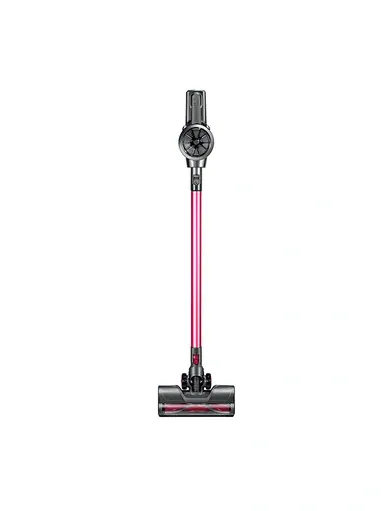
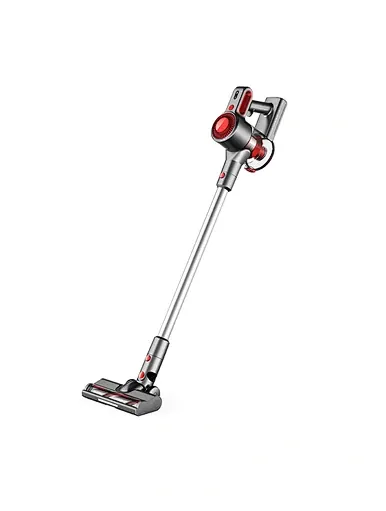
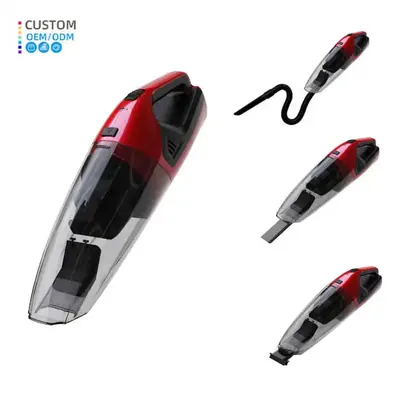
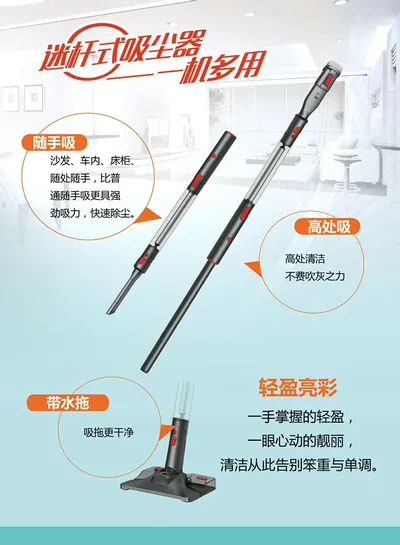
A cordless vacuum is a battery, a motor and a floor head sold as one object. The runtime on the box is measured in the lowest mode with a new battery; the number that matters is the runtime in the mode the customer will actually use.
The battery platform is the product decision
Most cordless cleaners are built around one of a few cell formats. The nominal voltage, the cell type and the number of cells decide runtime, peak suction and weight together, so a buyer cannot ask for more of one without paying in the other two.
A removable battery is worth more than a larger fixed one: the customer can buy a second pack, and the product survives the day the first pack fades. It also changes the packaging, because the pack ships as a separate item with its own transport documentation.
Runtime in the real mode, not the eco mode
A cleaner that runs 45 minutes in eco and 8 minutes in boost is a 12-minute cleaner for a carpeted home. Ask for runtime at the nozzle in each mode, with the motorised floor head fitted, because the head draws current too.
Charging time matters as much as runtime in apartments without a spare socket. A wall dock that holds the cleaner and the tools is a cheap way to keep the product in use; a loose charger in a drawer is where cordless cleaners go to die.
The floor head does the cleaning
A motorised brush bar lifts carpet pile and picks up hair; a soft roller is better on hard floors and does not scatter debris. The head has to be easy to open, because hair wraps around the bar and the customer will not cut it out with scissors every week.
Edge cleaning is the specification that shows in reviews. A head that leaves a 20 mm strip along the skirting board is noticed immediately. Ask for the edge gap dimension and check it on a sample against a wall.
What changes by market
| Market group | Voltage | Plug | Typical preference |
|---|---|---|---|
| UK / Europe | 230 V | Type G / Type F | Soft roller first, hard floors common |
| 120 V markets | 120 V | Type A / Type B | Motorised brush bar, larger bin |
| Japan | 100 V | Type A | Light body, quiet motor, compact dock |
| Australia / NZ | 230 V | Type I | Hard floor roller, removable battery |
Private label and the parts that wear
The battery, the filter and the brush bar are the three parts that decide whether the product is still used after a year. A private label program should quote spare filters and a spare battery alongside the cleaner, because a customer who cannot buy either replaces the whole machine.
Color is the cheapest differentiation: housing, dock and tools can be color-matched to a house brand without new tooling. The bin and filter housing can carry the brand moulded in when volume justifies it.
Cordless vacuum questions buyers ask
Why is the quoted runtime longer than what customers report?
Because it is measured in the lowest mode, often without the motorised head. Ask for runtime per mode with the head fitted and quote the shortest figure honestly on the box.
Fixed or removable battery?
Removable costs more and sells better. It lets the customer replace the pack instead of the machine, and it lets you sell a second pack as an accessory.
Does a higher voltage always mean more suction?
No. Suction depends on the fan, the motor and the air path. Voltage sets the platform; the head and the seal decide what reaches the floor.
Tell us the floor mix, the runtime you need in the main mode and whether the battery must be removable, and we will quote the platform, the head and the dock as one build.
Need help choosing?
Send us the product type, target market and estimated volume — we will shortlist models and quote.