Blender OEM & ODM
A blender is sold on peak wattage and judged on whether it can move a thick mixture without stalling. That is a jar and blade geometry question first and a motor question second, which is why a well-shaped 500 W blender outperforms a badly shaped 1000 W one.
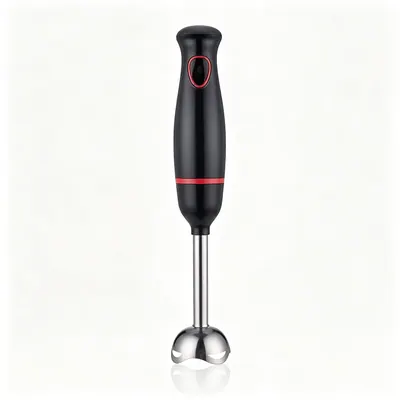
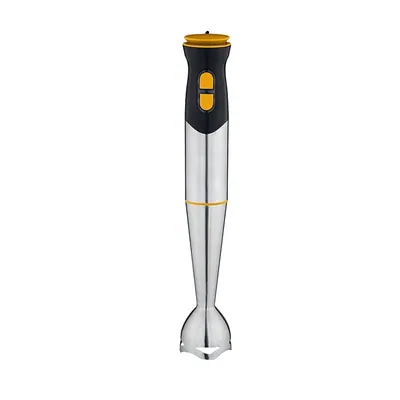
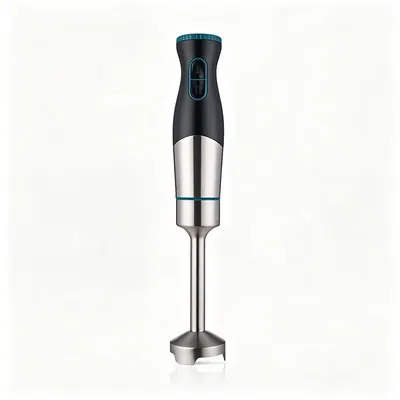
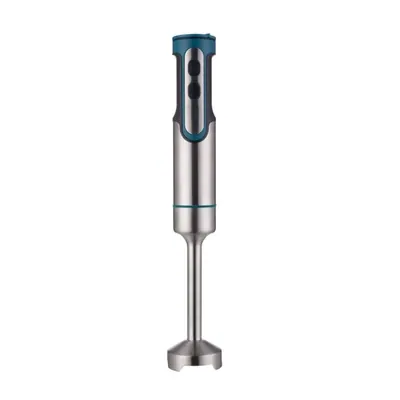
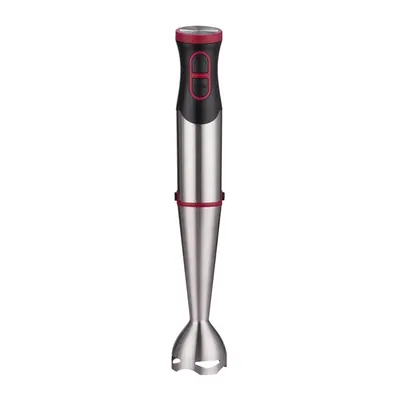
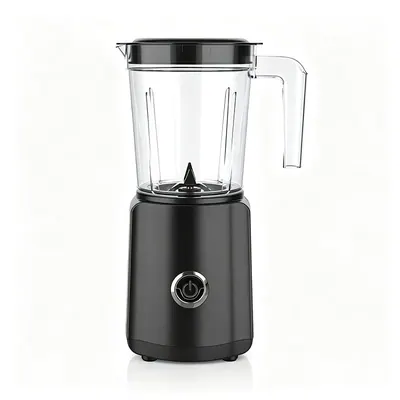
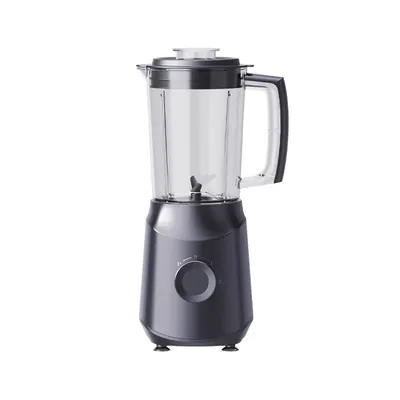
The vortex is the mechanism
A blender works by creating a vortex that pulls the mixture down into the blades and back up the walls. If the vortex collapses — thick smoothies, small quantities, frozen fruit — the blades spin in a cavity and do nothing, and the customer blames the motor.
Jar shape and blade angle create the vortex. A jar with a slight taper and a square cross-section at the base breaks up the rotation and keeps the mixture moving; a straight round jar lets the whole mass rotate together and the blending stops.
Blades: number, angle and sharpness
Four blades at two angles pull the mixture down and push it out; two blades do less. Sharpness matters for frozen and fibrous ingredients and is lost quickly on stamped blades, which is why a dull blender smears rather than blends.
The blade assembly is also the seal: the shaft passes through a bearing into the jar, and that seal is what fails first in a wet environment. A replaceable blade-and-seal assembly is a service part worth designing for.
| Configuration | Vortex | Best for | Weakness |
|---|---|---|---|
| 2 blades, flat jar | Weak | Liquids only | Stalls on thick mixes |
| 4 blades, tapered square jar | Strong | Smoothies, frozen fruit | Needs a tamper for very thick mixes |
| 6 blades, tall jar | Strong | Large batches | Harder to clean |
| Vacuum or personal cup | Depends on cup shape | Single servings | Small volume, easy to stall |
Wattage, cooling and duty cycle
Peak wattage is a marketing number; the number that matters is how long the motor can run before the thermal cut-out trips. A blender rated for 60 seconds of continuous use is not a blender for a family of four's morning smoothies.
Cooling is the reason: a small motor in a sealed base heats quickly, and the thermal cut-out is what saves it. A motor with a fan and a vented base can run longer, and that is worth more than an extra hundred watts of peak power.
Jar material and the parts that fail
Glass is heavy, scratch-resistant and does not absorb smell; Tritan is light, shatter-resistant and scratches. For a product that will be dropped in a kitchen, Tritan is the practical choice; for one sold on durability, glass.
The failures are the blade seal, the coupling between the motor and the jar (a plastic spline that strips), and the switch. A metal-reinforced coupling costs little and removes the most annoying failure — the motor running with the blades not turning.
Market configuration at a glance
| Market | Voltage | Plug | What changes |
|---|---|---|---|
| EU / UK | 220–240 V | C / F, G | Noise and standby declaration, WEEE, food-contact declaration |
| North America | 110–120 V | A / B | Higher current; wider jars common |
| Japan | 100 V | A | Re-rated motor; duty cycle shorter |
| SE Asia | 220–240 V | C / G | Ice crushing expected; stronger coupling and blades |
Blender questions buyers ask
Does peak wattage mean a better blender?
No. What matters is continuous duty before the thermal cut-out, and whether the jar and blades can create a vortex. A 500 W blender with good geometry beats a 1000 W one that stalls.
Why does my smoothie stop blending?
The vortex collapsed. Thick mixtures and small quantities do not circulate, so the blades spin in a cavity. A tapered jar, angled blades and a tamper fix it; more power does not.
Glass or Tritan?
Glass is heavier and does not scratch or hold smell; Tritan is lighter and survives being dropped. For a family kitchen, Tritan is usually the practical answer.
What fails first?
The blade seal, then the jar-to-motor coupling. A replaceable blade-and-seal assembly and a metal-reinforced coupling are the two design choices that keep a blender in service.
Tell us the jar size and whether ice crushing is required, and we will quote the blade assembly and the coupling as separate lines.
Need help choosing?
Send us the product type, target market and estimated volume — we will shortlist models and quote.