Baby Bottle Sterilizer OEM & ODM
A bottle sterilizer is sold on capacity in bottles, and capacity is the least interesting number on the box. What decides whether the customer keeps using it is the drying function — a sterilizer that leaves bottles wet is a sterilizer that gets used twice.
Baby Bottle Sterilizer OEM & ODM: models, specifications and MOQ
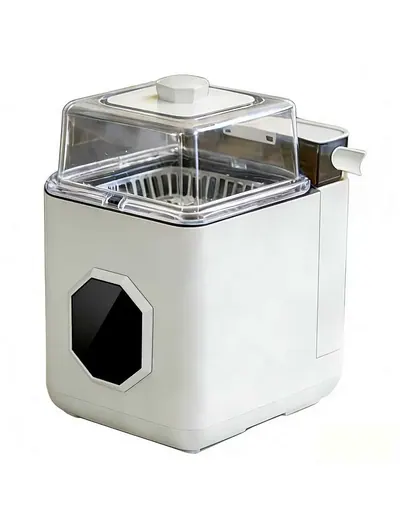
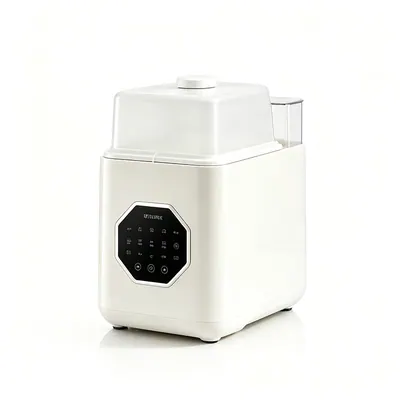
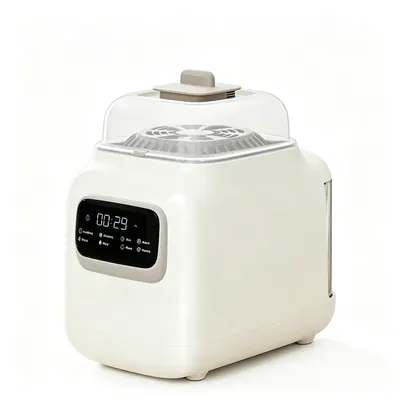
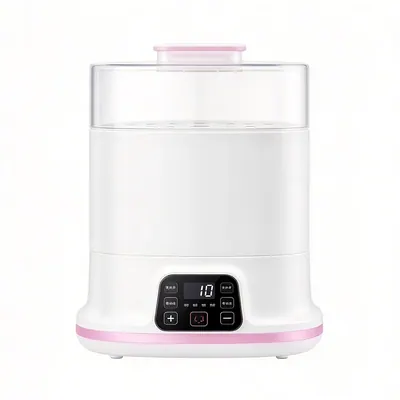
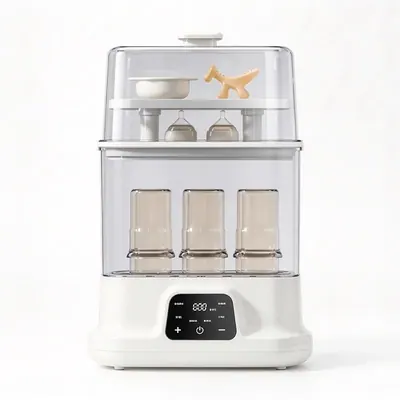
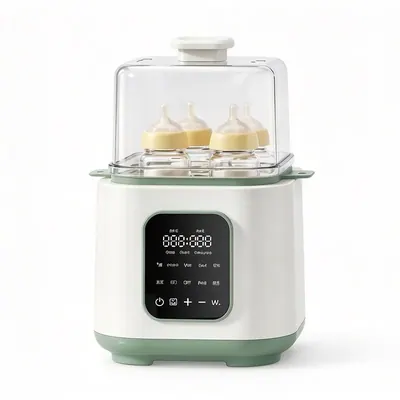
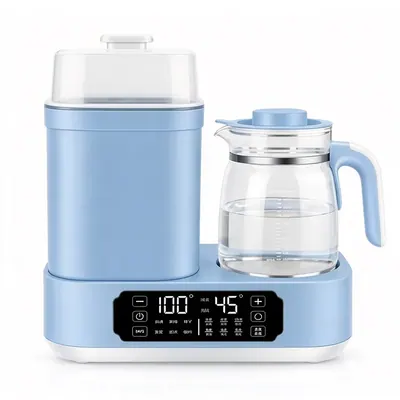
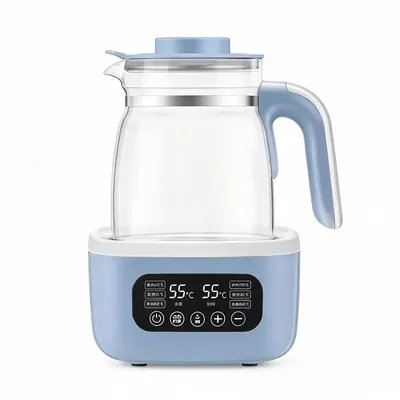
Steam, UV or microwave: three different claims
Steam sterilization holds items at about 100 °C for five to ten minutes, which kills bacteria and most viruses on the surfaces the steam reaches. UV cabinets expose surfaces to ultraviolet light, which works on what the light hits and not inside a bottle's shadow. Microwave bags are a convenience format with limited life.
The honest positioning is that steam is the most reliable for bottles and teats because steam reaches the inside, and that UV is a storage-and-surface product. A brand that sells UV as equivalent to steam will be asked why the bottle's teat still discolours.
| Type | Reaches inside the bottle | Cycle time | Drying | Where it belongs |
|---|---|---|---|---|
| Steam + hot-air dry | Yes | 8–12 min + drying | Yes, with filtered air | Mainstream and premium |
| Steam only | Yes | 8–12 min | No — bottles stay wet | Value |
| UV cabinet | Partly | 10–20 min | Yes, by airflow | Storage, not first-line sterilization |
| Microwave bag | Yes | 3 min | No | Travel |
Drying is the feature that decides usage
A wet bottle has to be dried before it is filled, and a parent who has to dry four bottles by hand stops using the machine. The drying function is a fan plus a heater that pushes filtered air through the chamber, and it is the single biggest differentiator in the category.
The air has to be filtered, or the drying stage re-contaminates what was just sterilized. A HEPA or a fine filter on the intake, and a chamber that is closed during drying, are what make the feature real.
Capacity and the shape of the chamber
Bottle count is quoted with bottles standing upright and nothing else inside. The moment the customer adds teats, a breast pump funnel and a dummy, the real capacity halves. A chamber with a removable basket and a second level uses the height, which is where the usable capacity comes from.
Height also decides compatibility: tall anti-colic bottles need a taller chamber, and a chamber that fits only short bottles returns to the shop.
Scale, the heating plate and the parts that fail
The heating plate scales in hard water, and a scaled plate takes longer and produces less steam. A plate that can be descaled with vinegar without dismantling the unit, and a descaling reminder, keep the cycle time honest.
The parts that fail are the plate, the door seal and the fan. The seal loses its shape and steam escapes, which lengthens the cycle and eventually lets the cut-out trip; the fan bearing dries out and the drying stage gets noisy.
Market configuration at a glance
| Market | Voltage | Plug | What changes |
|---|---|---|---|
| EU / UK | 220–240 V | C / F, G | Food-contact declarations, WEEE, local-language warnings |
| North America | 110–120 V | A / B | Higher current, slower steam build, UL-style marking |
| Japan | 100 V | A | Re-rated element; cycle time longer |
| SE Asia | 220–240 V | C / G | Hard water; descaling access is the deciding factor |
Sterilizer questions buyers ask
Is UV sterilization as good as steam?
For bottles, no. Steam reaches the inside surface; UV only treats what the light can see, so a teat in shadow is not treated. UV cabinets are better understood as storage with a surface treatment.
Why do wet bottles come out of a sterilizer?
Because the unit has no drying stage. Steam sterilizing leaves condensation, and a parent who has to hand-dry four bottles stops using the machine. A filtered hot-air drying stage is the feature that makes the difference.
How many bottles does it really hold?
Fewer than the box says once teats and pump parts go in. Look at chamber height and whether there is a second level; a removable basket uses the height and gives real capacity.
What fails first?
The heating plate (scale), then the door seal, then the drying fan. All three are cheap to design well and all three shorten the cycle time when they degrade.
Tell us steam or UV, whether drying is required and the tallest bottle you must fit, and we will quote the drying stage as its own line.
Need help choosing?
Send us the product type, target market and estimated volume — we will shortlist models and quote.