Air Cooler OEM & ODM
An evaporative air cooler is sold as an air conditioner alternative, and in the wrong climate it is worse than a fan. The number that decides whether it works is not airflow or tank size, it is the relative humidity of the room it is used in.
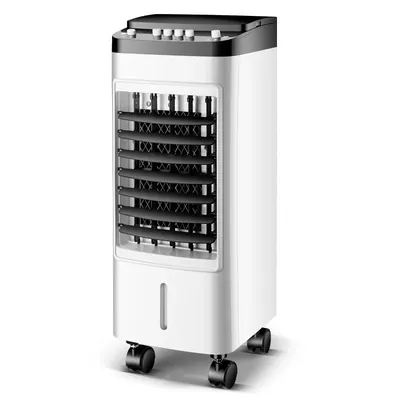
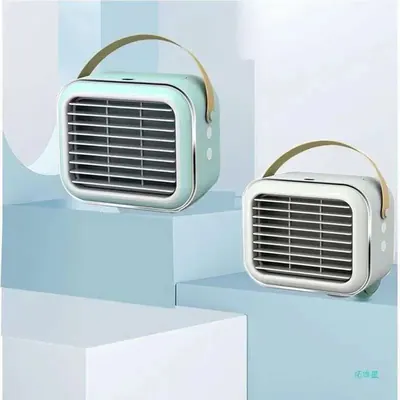
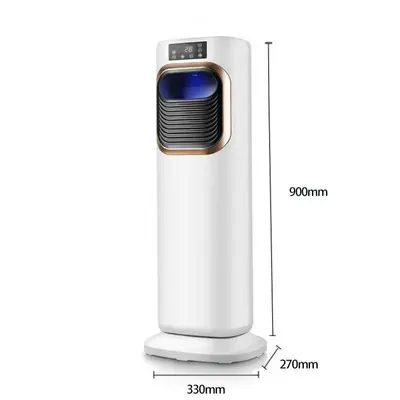
Evaporative cooling is a humidity machine
A cooler drops the air temperature by evaporating water into it. In dry air the drop is large; in humid air the air is already close to saturation, evaporation is slow, and the unit adds moisture without dropping the temperature much. Above roughly 60% relative humidity the effect is marginal, and above 70% the unit makes the room feel worse.
That is not a defect and it is not something a better pump fixes. It means the product has a climate, and the honest marketing sells it to that climate. Brands that sell it into humid markets get returns from customers who expected an air conditioner.
| Relative humidity | Temperature drop you can expect | Verdict |
|---|---|---|
| Below 30% | 8–12 °C at the outlet | Works very well |
| 30–50% | 4–8 °C | Works well |
| 50–60% | 2–4 °C | Marginal, fan-like comfort |
| 60–70% | 1–2 °C | Mostly adds humidity |
| Above 70% | Effectively none | Not the right product |
The pad is the working part and it is a consumable
Cooling happens on the evaporative pad, so pad area and thickness set the effect far more than fan power does. A thicker pad gives more contact time and a bigger drop; a thin pad with a strong fan just moves humid air quickly.
Pads also scale and clog, especially with hard water. A pad that can be removed and rinsed, and replaced cheaply, keeps the unit working for years. A sealed pad turns a working product into a discarded one after one season, which is the pattern that gives the category a bad reputation.
Water flow, pump and the smell problem
The pump has to wet the whole pad evenly, not just the middle. A distribution pipe with evenly spaced holes and a slight tilt wets the pad top-down; a single spout wets a channel and leaves dry patches that do no cooling.
Standing water is the other issue: a tank that cannot be emptied completely grows biofilm, and the unit then smells. A drain plug at the lowest point and a tank that empties fully are worth more in reviews than an extra fan speed.
Airflow, noise, and where the unit sits
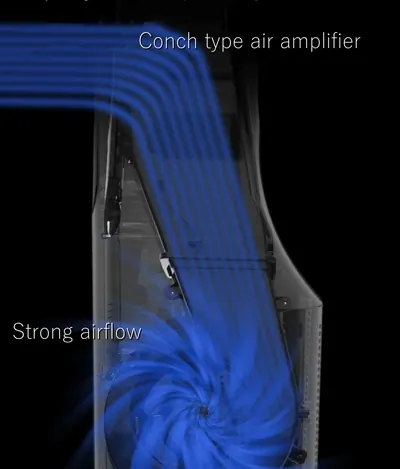
Airflow is quoted in cubic meters per hour and it is the number that decides how far the cool air reaches. A unit rated for a room needs to move the room's volume several times an hour, and a unit with high airflow but a small pad produces a lot of air at a small temperature drop.
Noise follows airflow: moving more air is louder at the same fan design. The practical answer for a bedroom product is a larger, slower fan and a thicker pad rather than a small fan at high speed, which is louder and cools less.
Market configuration at a glance
| Market | Voltage | Plug | What changes |
|---|---|---|---|
| EU / UK | 220–240 V | C / F, G | Energy and noise declaration; WEEE registration |
| North America | 110–120 V | A / B | Higher current; usually sold for dry western states |
| Middle East | 220–240 V | C / G | The core market: very low humidity, high ambient, larger pads |
| India / SE Asia | 220–240 V | C / D / G | Sold on the dry-season argument, not year-round |
| Japan | 100 V | A | Re-rated motor and pump at the lower voltage |
Air cooler questions buyers ask
Is an air cooler the same as an air conditioner?
No. A cooler evaporates water into the air and drops the temperature by a few degrees in dry conditions; an air conditioner moves heat outside and works at any humidity. Selling one as the other is the main source of returns in this category.
Why does it stop working in summer?
Because summer is humid in many places. The unit's effect depends on how much water the air can still take up, so the same cooler performs very differently at 30% and 70% relative humidity.
How often does the pad need replacing?
Every season or two with normal use, sooner with hard water. A pad that cannot be removed and rinsed is the reason many units are thrown away rather than maintained.
What should be measured on a sample?
Outlet temperature drop at a stated humidity, airflow in cubic meters per hour, noise at one meter, and how evenly the pad wets. Those four numbers decide whether the product delivers what the box promises.
Tell us the market and the humidity it will be sold into, and we will tell you the pad thickness, tank size and airflow that make sense — or that a fan is the better product for that climate.
Need help choosing?
Send us the product type, target market and estimated volume — we will shortlist models and quote.